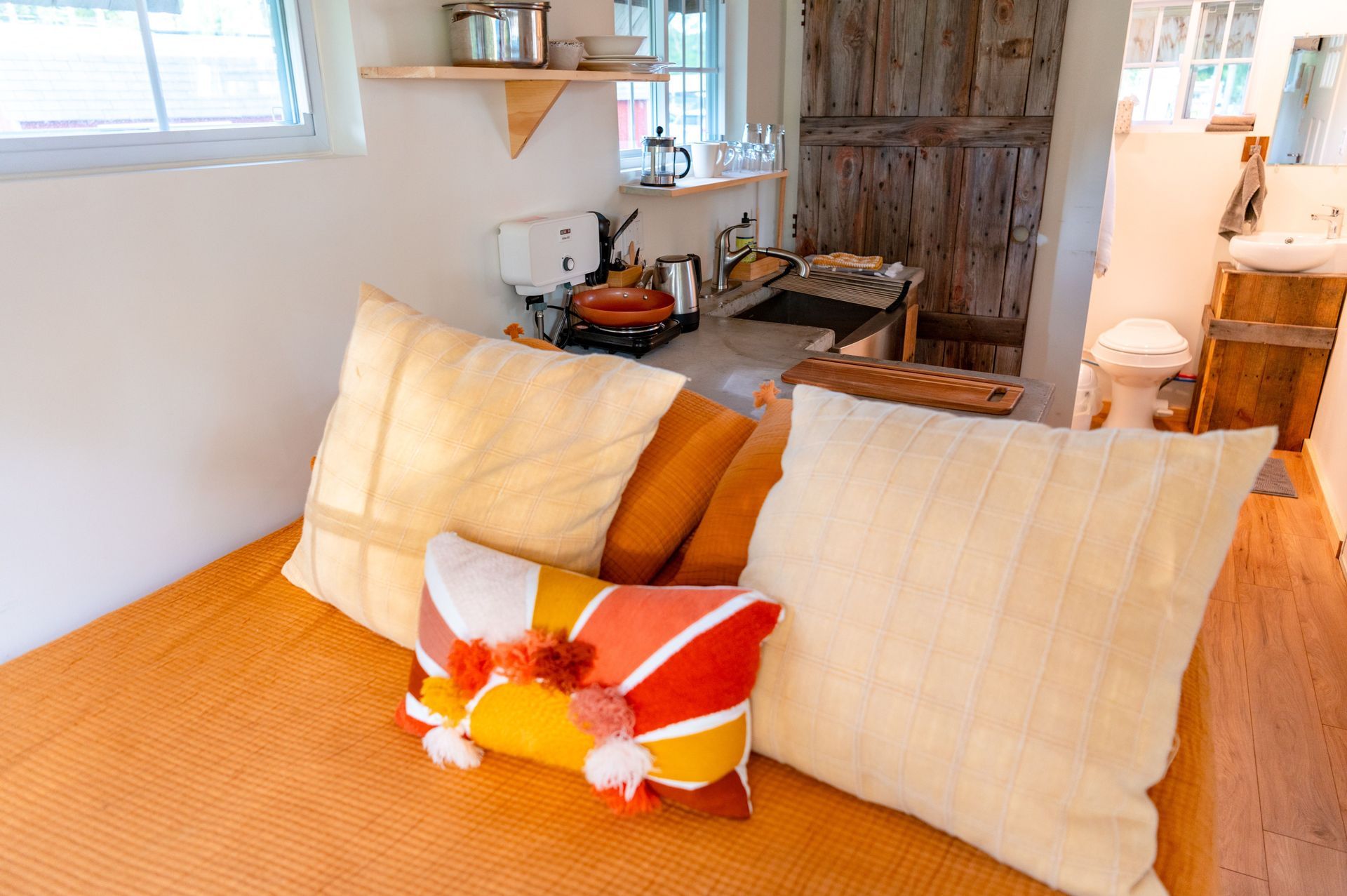
A couple outside Boyd bought a 399-square-foot park model, set it on a leased pad, and called their homeowners carrier to add it to the policy. The carrier declined — the unit was not a permanently affixed dwelling. They called an RV insurer next, and that underwriter asked whether the unit was still road-legal and licensed. It was not. The axles were gone and the hitch had been cut off. The second carrier declined too, and the park model sat uninsured straight through hail season.
That is not a fluke, and it is not a bad agent. It is the predictable result of a dwelling that does not match the definitions printed in standard policy forms. Tiny homes and park model RVs are two of the fastest-growing housing categories in Wise, Denton, and Parker counties, and both of them land in the seam between three separate kinds of insurance.
Three policy types, three different definitions
A homeowners policy insures a dwelling at a fixed address, built to residential code, sitting on a permanent foundation. Every part of the form — the dwelling limit, other structures, loss of use — assumes the house is not going anywhere.
A
mobile home policy covers a factory-built dwelling that was transported to a site and set there for good. Texas has a large, mature market for that coverage, and the rules around title, foundation, and skirting are well established.
An RV policy covers a recreational vehicle: something licensed, titled as a vehicle, and built to be towed or driven. Park models are manufactured to a recreational vehicle standard rather than a residential building code, which is exactly why a homeowners underwriter balks at them.
A tiny home can resemble all three and qualify as none of them. Which category it falls into is decided by how it was built, how it is titled, and how it is anchored — not by what the owner calls it.
Wheels and axles matter more than square footage
The first question any underwriter asks is whether the structure sits on a trailer frame. A tiny home on wheels is, to most carriers, a vehicle until proven otherwise. If it still has axles, a VIN, and a current registration, the path usually runs through an RV or travel trailer policy, sometimes with a
full-time occupancy endorsement when someone lives in it year round.
Take the wheels off and set the unit on piers or a slab and the vehicle path closes. Now the question becomes whether it can be titled as real property or as a manufactured home. If neither applies, some carriers will write it on a dwelling fire policy or an inland marine form, and some will not write it at all.
Owners often assume that removing the axles upgrades their options. It frequently does the opposite, at least until the title and foundation work is finished.
Where it sits changes the whole answer
A tiny home on land the owner holds outright is the cleanest case. The owner controls the site, can pursue a permanent foundation and a real property title, and eventually qualifies for a standard dwelling policy.
A tiny home on a leased pad in an RV park or a tiny home community is harder. The owner does not control the ground, so the liability picture changes and the carrier has to account for the park rules, the park own coverage, and how quickly the unit could be moved.
A tiny home parked behind a primary residence — a guest unit, a place for a parent, an office out back — is its own category again. It may attach to the main homeowners policy as a detached structure, or it may need to be scheduled separately. City and county rules across Rhome, Decatur, and Fort Worth also differ on whether it can be occupied at all, and a carrier will ask.
What North Texas weather does to the math
Wise County and the counties around it sit in one of the most active hail corridors in the country. A roof replacement on a site-built home is expensive. On a park model, a single hail event can approach or exceed the value of the entire unit, which changes how a carrier looks at the deductible.
Wind is the bigger concern for anything light and tall. A 10,000-pound unit on piers behaves very differently in a 70 mph gust than a brick ranch does, and anchoring is one of the first things an inspector looks at. Proper tie-downs are not only a safety measure — on many policies they are a condition of coverage.
Freeze damage is the quiet one. Compact plumbing running through an uninsulated skirted crawl space bursts readily, and a burst line inside 400 square feet soaks nearly everything the owner owns at once.
The paperwork decides what you qualify for
Before a carrier can quote, someone has to establish what the structure legally is. That usually means locating the certificate of title or the manufacturer statement of origin, confirming whether the unit was built to an RVIA, HUD, or residential code standard, and documenting the foundation or anchoring system.
Anyone who has been through
the paperwork on a manufactured home will recognize the pattern. The documents drive the coverage, not the other way around, and the sequence matters — correcting a title after a claim is far harder than correcting it before.
Photographs help more than most owners expect. Pictures of the build, the anchoring, the electrical service, and the water connection routinely turn a declination into an offer.
What to have ready before you call
Have the year, the manufacturer, and the serial or VIN number. Know the square footage and the construction standard the builder used. Know whether the unit sits on wheels, piers, or a slab, and who owns the ground under it.
Be ready to say how the structure is used — full-time residence, weekend place, rental, or guest quarters — because that single answer moves a quote more than almost anything else. And bring a realistic replacement figure that includes the build cost and any custom interior work, rather than the purchase price from three years ago.
Getting it covered without the runaround
This is the kind of risk that rewards shopping. No single carrier is right for every version of a tiny home, and TAP Insurance Agency works with a range of carriers across Texas, so the answer to an unusual dwelling is usually a matter of finding the one that writes it rather than a flat no.
Coverage terms, eligibility, and availability vary by carrier and by property, and nothing here changes the language in an actual policy. The policy form and the carrier underwriting decision control.
Call or text (800) 666-2254 or visit tapinsuretx.com for a free quote.