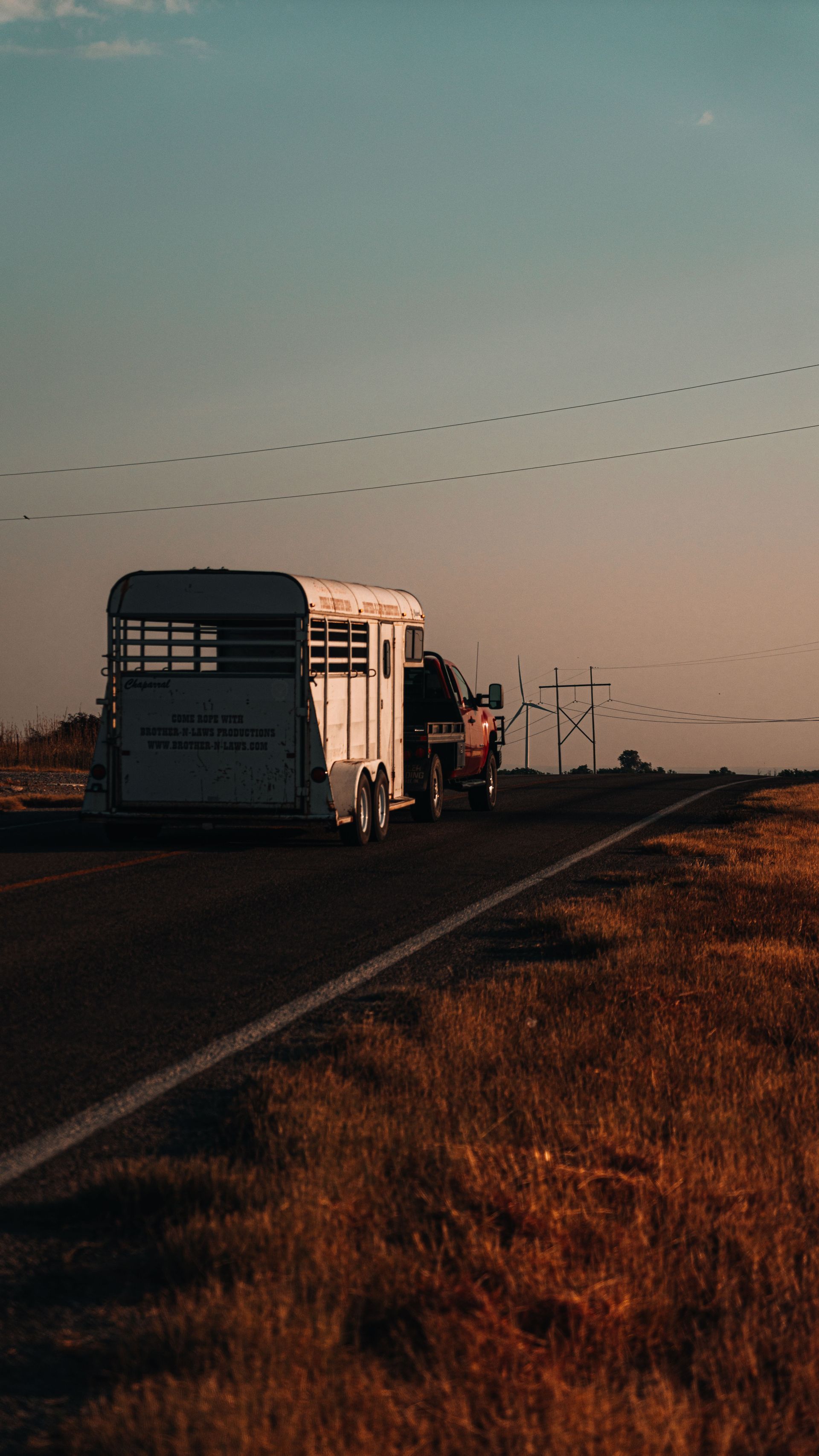
A Wise County contractor buys a one-ton dually and a 40-foot gooseneck, gets his DOT number, and starts hauling skid steers for a rental yard three states over. Eight months in, a DPS trooper puts him out of service at a scale outside Texarkana. Not for the load, not for the logbook. For his driver's license.
He had a Class C. The combination he was pulling needed a Class A. He had been legal on the day he bought the truck and illegal the day he hitched the trailer, and nobody told him the difference.
The number that decides everything is 26,001
Texas follows the federal standard. A commercial driver's license is required when the
gross combination weight rating is 26,001 pounds or more and the towed unit is rated over 10,000 pounds. Both halves have to be true. Miss either and you are back in Class C territory.
The word doing the work there is
rating, not weight. This is not what your rig weighs on the scale today with an empty deck. It is the manufacturer's rating on the certification label — the sticker in the door jamb on the truck and on the tongue or frame rail of the trailer. An empty trailer rated at 21,000 pounds still counts as 21,000 pounds toward the combination.
Run the arithmetic on a typical hotshot rig
Take a common setup: a one-ton dually rated at 14,000 pounds GVWR pulling a 40-foot gooseneck flatbed rated at 21,000.
Fourteen thousand plus twenty-one thousand is thirty-five thousand. That is well past 26,001, and the trailer is well past 10,000.
That combination requires a Class A CDL even if the deck is empty and even if the driver never leaves Texas on a given day.
Now change one variable. Same truck, but a 14,000-pound bumper-pull instead. Fourteen plus fourteen is twenty-eight thousand — still over 26,001, still a Class A. People assume dropping the gooseneck solves it. Usually it does not.
To stay under the line with a 14,000-pound truck, the trailer has to be rated at 12,000 or less. That is a small trailer for freight work, and it is why most real hotshot operations are Class A operations whether the owner realizes it or not.
Where owners get caught out
The truck was legal when they bought it. A 3500 dually by itself is a Class 3 truck under 14,000 pounds and needs nothing special. The license question only appears when a trailer is attached, and the dealer selling the truck has no reason to raise it.
They are looking at actual weight, not the sticker. Running empty feels like it should not count. It does. The rating is the rating.
Somebody told them it only applies over 26,000 pounds actual. That is the intrastate non-CDL rule in some states for some vehicle types, and it does not describe federal interstate combination rules.
They hired a driver with a Class C and never checked. The motor vehicle report shows a valid, unsuspended license. It does not shout that the license is wrong for the equipment.
Why your insurance carrier cares as much as DPS does
An out-of-service violation for a license class is not a parking ticket. It lands on your CSA record, it feeds your driver out-of-service percentage, and that percentage is one of the first things a trucking underwriter looks at. A fleet running well above the national average on driver out-of-service will pay for it at renewal, and some carriers will simply decline.
There is a worse version. If a loss happens while an improperly licensed driver is behind the wheel, the carrier will look hard at whether the driver was qualified. Coverage disputes over driver qualification are a real category, and they arrive at the worst possible time. We wrote separately about
what happens when a brand-new operating authority goes looking for its first policy, and licensing is the issue that most often turns a workable submission into a declined one.
What to do if you are not sure where you stand
Read both stickers. Truck door jamb and trailer frame. Write down both numbers and add them.
Compare against 26,001. If the total is 26,001 or more and the trailer alone is over 10,000, every driver operating that combination needs a Class A.
Check every combination you actually run. Fleets mix and match. The answer can be different depending on which trailer goes behind which truck on a given morning.
Pull your drivers' license classes. Not their names on a list — the actual class letter on each license.
If you are over the line, get the CDL. There is no endorsement, waiver or paperwork that fixes it. Either the driver upgrades or the equipment comes down.
One more wrinkle: intrastate versus interstate
Texas issues its own intrastate exemptions for certain operations, and that is where a lot of the confusion on message boards comes from. Someone running farm equipment inside one county may operate under a different set of rules than a for-hire carrier crossing the Red River with a load of skid steers.
If you hold a USDOT number and an MC number and you haul for pay across state lines, assume the federal standard applies to you and work from there. The exemptions that exist are narrower than they sound, and none of them turn a 35,000-pound combination into a Class C vehicle.
The insurance side of the same question
Once the licensing is straight, the coverage conversation gets easier, because carriers price a compliant fleet very differently from one with open questions. What a hotshot operation needs at minimum is auto liability at the limit your authority and your brokers require, motor truck cargo sized to the loads you actually haul, and physical damage on equipment you cannot replace out of pocket. Trailer interchange comes in if you ever pull a trailer you do not own.
If you are not certain your combinations are legal, that is worth sorting before renewal rather than after an inspection. We are glad to look at the ratings with you and tell you plainly where you land — and if you want to see how the coverage side fits together, our
guide to what trucking insurance actually costs in Texas walks through the pieces.
You can also just
send us the details and we will take a look. It is a short conversation and it is cheaper than a roadside surprise.
Call
(800) 666-2254 — or text
QUOTE to (817) 646-6700 · tapinsuretx.com
Educational only; coverages and availability vary by carrier. TAP Insurance Agency, PLLC — Rhome, TX, licensed in Texas and Oklahoma.