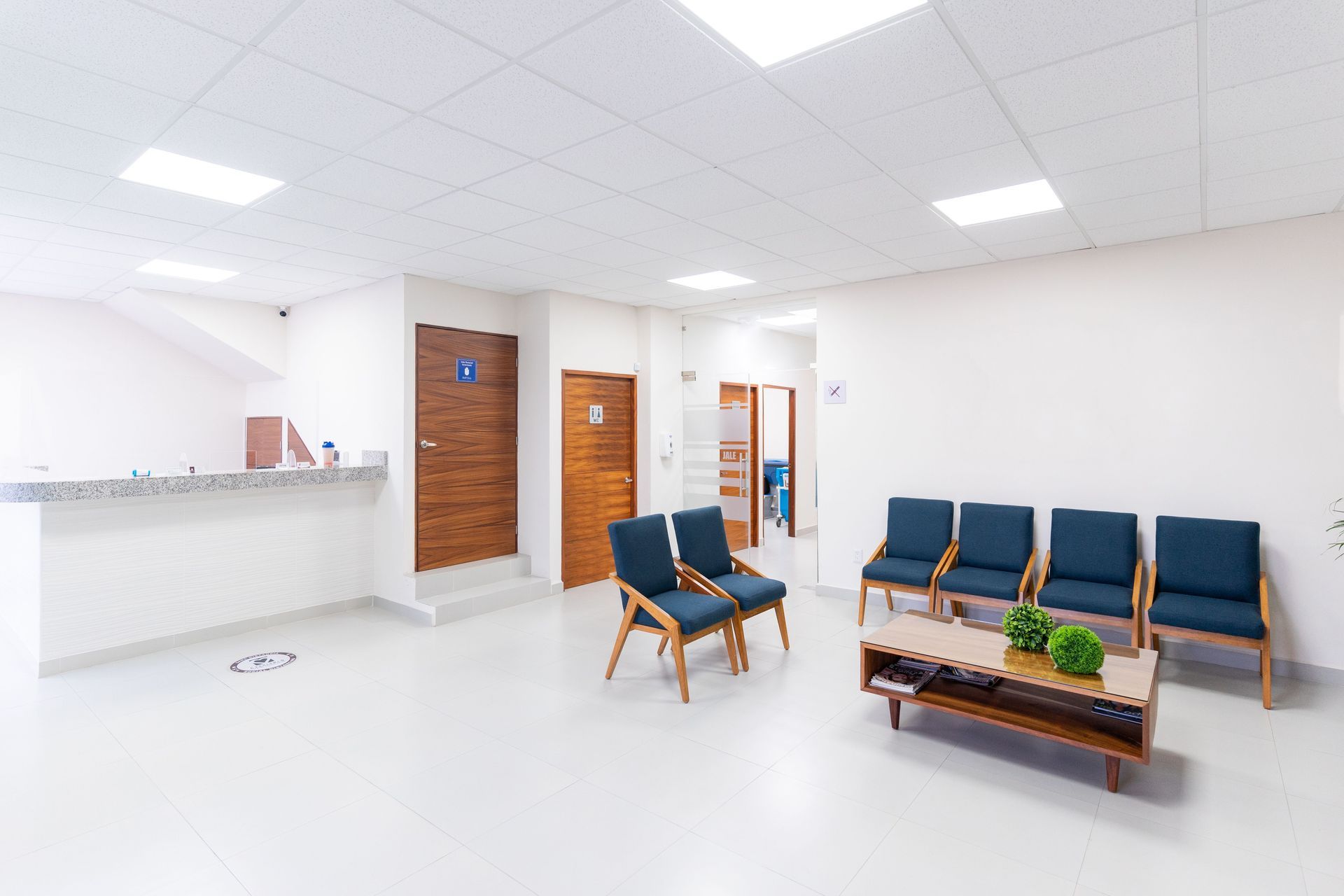
A dentist in Denton breaks her wrist skiing over Christmas. She is out for four months. Her personal disability policy does exactly what she bought it to do and starts replacing her income after the elimination period. Meanwhile the practice still owes rent on the building, payments on the chair and the imaging equipment, salaries for two hygienists and a front-desk manager, malpractice premiums, and the utility bill.
Her income is protected. Her practice is not. Four months later she has a personal policy that worked perfectly and a business that has burned through its cash reserve keeping the lights on for a doctor who was not there.
What business overhead expense insurance does
Business overhead expense coverage, usually shortened to BOE, is a disability policy that reimburses the fixed operating costs of a business when its owner cannot work. It does not pay the owner. It pays the business's bills.
The structure is straightforward. You insure a monthly amount of overhead. If a covered disability keeps you from working past the elimination period, the policy reimburses actual eligible expenses up to that monthly limit, for a defined benefit period.
What it typically covers, and what it does not
Generally covered: rent or mortgage interest on the business premises, utilities, property and liability insurance premiums, employee salaries and payroll taxes, equipment lease payments, accounting and legal fees, professional dues, and interest on business debt.
Generally not covered: your own salary or draw, the salary of anyone hired specifically to replace you professionally, the cost of inventory or goods, and any expense that stops when the doors close.
That first exclusion is the one that surprises people, and it is not an oversight. Your income is the job of your personal disability policy. BOE exists to do the other half, and the two are designed to sit alongside each other rather than overlap.
Who needs it and who does not
BOE is built for a business whose revenue depends on one person showing up and whose overhead keeps running when they do not. That describes most professional practices and a good number of trades.
Strong fit: solo or small-group medical, dental, veterinary, chiropractic and optometry practices. Law and accounting firms with one or two principals. Insurance and real estate agencies. Small engineering and architecture firms. Any owner-operator trade where the owner is the one doing billable work and the shop has a lease and payroll.
Weak fit: a business with several interchangeable producers where one absence does not stop revenue, or a business with almost no fixed overhead. If closing the doors for three months costs you very little, there is little to reimburse.
Benefit periods are short on purpose
Personal disability policies are often written to age 65 or 67. BOE benefit periods are usually much shorter — commonly twelve, eighteen or twenty-four months — and that is deliberate.
The logic is that a short absence is a cash-flow problem and a long one is a structural decision. If an owner is going to be out for three years, the realistic answers are to sell the practice, bring in a partner, or close it. BOE is designed to fund the bridge, not to subsidise a business indefinitely, and pricing reflects that.
Elimination periods are typically shorter than on personal coverage too, often thirty to ninety days, because a business runs out of cash faster than a household does.
How to size the benefit
Pull twelve months of your profit and loss statement and total the expenses that would continue if you were not there. Rent, payroll for staff who stay, equipment leases, insurance, utilities, professional fees, loan interest. Exclude your own compensation and anything variable that stops with the work.
Divide by twelve. That monthly number is the benefit you need. Insuring more than that does not help, because the policy reimburses actual expenses rather than paying a flat benefit — you cannot profit from it, and paying premium for a limit above your real overhead is wasted.
A common mistake: buying it instead of personal coverage
Owners on a tight budget sometimes ask whether BOE can stand in for a personal disability policy, since the business pays the premium and the money keeps things afloat. It cannot, and the two are not interchangeable.
BOE reimburses business expenses only, and explicitly excludes your own compensation. If you are out for six months with only BOE in force, the practice survives and your household does not. If you have to choose one first, personal coverage protects the person, and BOE protects what the person built. Most owners in this position start with personal disability and add BOE at the next renewal.
One more point owners raise: what if the business is seasonal, or overhead varies a lot month to month? Use a twelve-month average rather than a peak month. The policy reimburses actual expenses up to the limit, so a limit set at your busiest month simply costs more without paying more in a quiet one.
Where it fits in a complete plan
For an owner-operated practice, three pieces do different jobs and none substitutes for another.
Personal disability replaces the owner's income. BOE keeps the business's fixed costs paid. Key person coverage handles the loss of someone the business depends on, and for a partnership, buy-sell funding handles the ownership question.
Most owners have one of the four. Very few have looked at all of them together, and the gaps only become visible when something happens.
Worth an hour of your time
This is not a complicated product, but it is one almost nobody is sold, because it does not come up in a conversation about liability or property coverage. If you own a practice or a shop where the revenue walks in the door with you every morning, it is worth an hour.
We can build the overhead number with you from your own P&L, quote it through our disability brokerage desk alongside your
business liability coverage, and tell you honestly if it does not fit your situation.
Start the conversation here.
Call (800) 666-2254 — or text
QUOTE to (817) 646-6700 · tapinsuretx.com
Educational only; coverages and availability vary by carrier. TAP Insurance Agency, PLLC — Rhome, TX, licensed in Texas and Oklahoma.