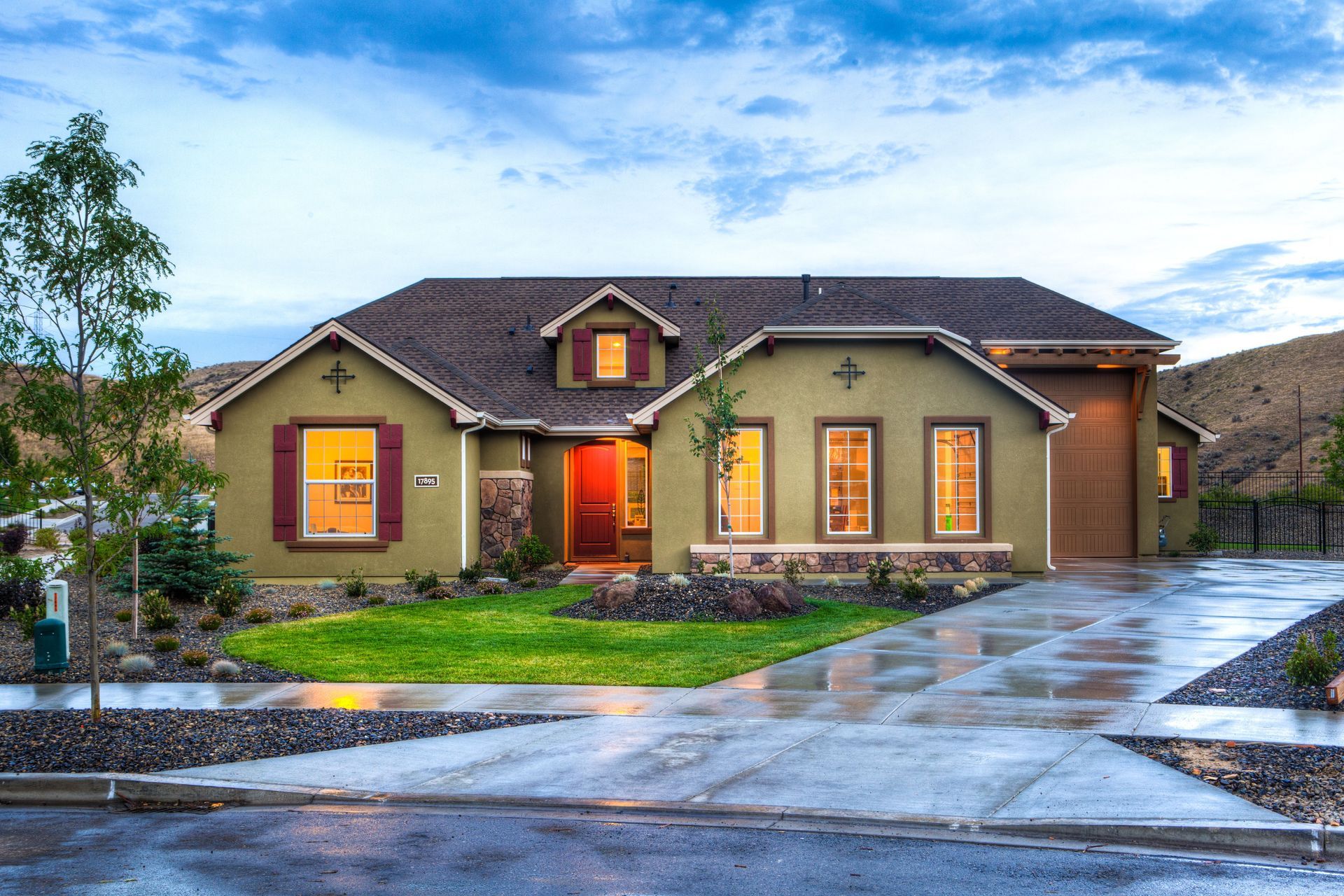
Congratulations on buying your first home. That’s a big deal.
Now here’s another thing that’s non-negotiable: homeowners insurance. Your mortgage lender will require it before they hand over the keys, and honestly, you need it anyway — because your home is probably the most expensive thing you’ll ever own.
But if you’ve never bought homeowners insurance before, the whole process can feel overwhelming. What does it cover? What doesn’t it cover? Why do you need it? And why does Texas feel like it needs special insurance considerations?
Let me break it down in plain English.
What Homeowners Insurance Actually Covers
Homeowners insurance comes in parts (called "coverages"). The main ones are:
Dwelling Coverage (Coverage A)
This is the biggie. It covers the structure of your house — the roof, walls, foundation, attached garage, built-in appliances, and permanently installed fixtures.
If your house catches fire, gets hit by a hail storm, or is damaged by a covered peril, dwelling coverage pays for repairs or rebuilding. This is why your mortgage lender requires it.
How much do you need? Enough to rebuild your home if it’s totally destroyed. This isn’t the same as what you paid for the house — it’s the replacement cost of materials and labor. In Texas, that varies by region, but a good rule of thumb is $100-150 per square foot. A 2,000 sq ft house might need $200,000-$300,000 in dwelling coverage.
Personal Property Coverage (Coverage C)
This covers your stuff inside the house — furniture, clothing, electronics, kitchen items, etc. If a break-in, fire, or other covered peril damages your belongings, personal property coverage pays to replace them (usually up to 50-70% of your dwelling limit).
Liability Coverage (Coverage E)
If someone gets injured on your property or you accidentally damage someone else’s property, liability coverage pays their medical bills or lawsuit costs (up to your policy limit, typically $100,000-$300,000).
This protects you if a visitor slips on your stairs, or if your tree falls on a neighbor’s house.
Medical Payments to Others (Coverage F)
This is a small add-on (often $1,000-$5,000) that pays medical bills if someone is injured on your property, even if you’re not found liable. It avoids the hassle of going to court for minor injuries.
What Homeowners Insurance Does NOT Cover (And This Matters in Texas)
Here’s where things get tricky, especially in Texas.
Flood
Your standard homeowners policy
does not cover flood damage. This is huge because Texas floods. A lot.
Houston has flooded multiple times in the last decade. The DFW area has seen major flooding events. And if you’re near a creek, river, or in a flood zone, the risk is real.
Flood insurance is separate and must be purchased through the National Flood Insurance Program (NFIP) or a private flood insurer. It’s required if your home is in a FEMA Special Flood Hazard Area (SFHA) and you have a government-backed mortgage.
Even if it’s not required, if there’s any risk of flooding where you live, buy it anyway. Flood damage can cost tens of thousands of dollars.
Earthquake
Texas doesn’t have many earthquakes, so earthquake insurance is rarely a concern here. But it exists if you want it.
Wear and Tear, Maintenance
Insurance covers sudden, accidental damage. It doesn’t cover slow deterioration. If your roof gradually wears out over 20 years, that’s maintenance — you pay for it. If a storm damages it tomorrow, insurance covers it.
High-Value Items (Expensive Jewelry, Art, Collections)
Your personal property coverage has limits on certain items. Jewelry might be capped at $1,500, firearms at $2,500, art at $2,500, etc. If you have expensive items, you need a separate "scheduled personal property" rider.
Texas-Specific Risks Your Insurance Should Address
Texas throws a few curveballs that affect your insurance.
Hail
North Texas (DFW) is literally hail alley. Severe hailstorms can cause thousands of dollars in damage to roofs, vehicles, and siding.
Your homeowners policy covers hail damage, but here’s the catch: your roof age matters. If your roof is more than 10-15 years old, some insurers won’t cover hail damage, or they’ll charge much more. When you’re house hunting or getting a quote, have your roof inspected and get its age documented.
Wind and Hail in Coastal Areas
If you’re in a coastal Texas county (Galveston, Corpus Christi, Beaumont), wind and hail coverage might be handled through TWIA (Texas Windstorm Insurance Association) instead of a regular private insurer. TWIA is the insurer of last resort — it covers where private insurers won’t.
Drought and Wildfire (Central and West Texas)
Central and West Texas have experienced severe droughts and wildfires in recent years. Wildfire coverage is included in standard policies but check that your coverage limits are adequate.
Frozen Pipes (Winter Storms)
Texas winters can be mild, but when ice storms hit (like the 2021 Uri storm), frozen pipes burst and cause massive water damage. This is covered under homeowners insurance, but it only applies if you’re maintaining the home properly (keeping heat on, insulating pipes, etc.).
How to Read a Homeowners Policy
A homeowners policy might be confusing at first, but here’s what to look for:
Declarations Page — Lists your coverage limits and deductibles. Make sure the amounts match what you want.
Coverages — Spells out what’s included. Read the exclusions (what’s NOT covered).
Deductible — What you pay out-of-pocket before insurance kicks in. Common deductibles are $500, $1,000, or $2,500. Some insurers use percentage deductibles (e.g., 2% of dwelling coverage) for hail or wind.
Endorsements/Riders — These are add-ons for extra coverage (flood, earthquake, scheduled personal property, etc.).
Deductible Types Explained
Most homeowners have a flat dollar deductible (e.g., "$1,000"). But for wind and hail in some areas, you might see a percentage deductible instead.
Percentage Deductible Example: If you have 2% wind/hail deductible on a $250,000 dwelling, your deductible is $5,000 (2% of $250,000). That’s higher than a typical flat deductible, so your premium is lower — but you pay more if you have a claim.
In Texas, especially North Texas with hail risk, percentage deductibles are common. It’s worth understanding what you’re agreeing to.
5 Tips to Save on Homeowners Insurance
1. Get multiple quotes. Rates vary by insurer. Three quotes might range from $2,500 to $4,000 for the same coverage. Shop around.
2. Bundle home and auto. Most insurers offer 15-25% discounts for bundling. This is often your biggest savings opportunity.
3. Improve home security. Deadbolts, alarm systems, security cameras, and fire alarms can lower premiums.
4. Increase your deductible if you can. Going from $500 to $1,000 can save 10-25% on premium. Only do this if you can afford to pay that deductible if you have a claim.
5. Maintain your home. New roof, updated electrical, plumbing upgrades — these signal lower risk to insurers and can earn discounts.
6. Ask about discounts for age, claims-free history, and paid-in-full. You might be eligible for things you don’t know about.
Key Questions to Ask Your Insurance Agent
Before you buy, make sure you understand:
- Is flood covered? (Answer: no, unless you add a separate flood policy)
- What’s my hail coverage? (Important in DFW)
- How old is the roof, and am I covered for hail damage?
- What deductible applies to wind/hail vs. other perils?
- Are my valuable items (jewelry, art, collections) adequately covered?
- Do I need earthquake insurance? (Unlikely in most of Texas, but ask)
- What discounts am I eligible for?
Ready to Protect Your Home?
Buying homeowners insurance as a first-time buyer doesn’t have to be stressful. The key is understanding what you’re covering (your house and belongings), what’s NOT covered (flood), and what Texas-specific risks matter to you (hail, wind).
At
TAP Insurance Agency, we help first-time homebuyers in Rhome, DFW, and across Texas find homeowners insurance that actually protects them. We explain coverage clearly, we shop multiple insurers to find the best rate, and we answer all your questions — no pressure.
Ready to get a homeowners insurance quote? Call us at
(800) 666-2254 or visit
www.tapinsuretx.com. We’re available Mon-Fri
7AM-7PM, Sat 9AM-6PM, and Sun by appointment.
TAP Insurance Agency — Your trusted independent agent in Rhome, serving DFW and all of Texas.