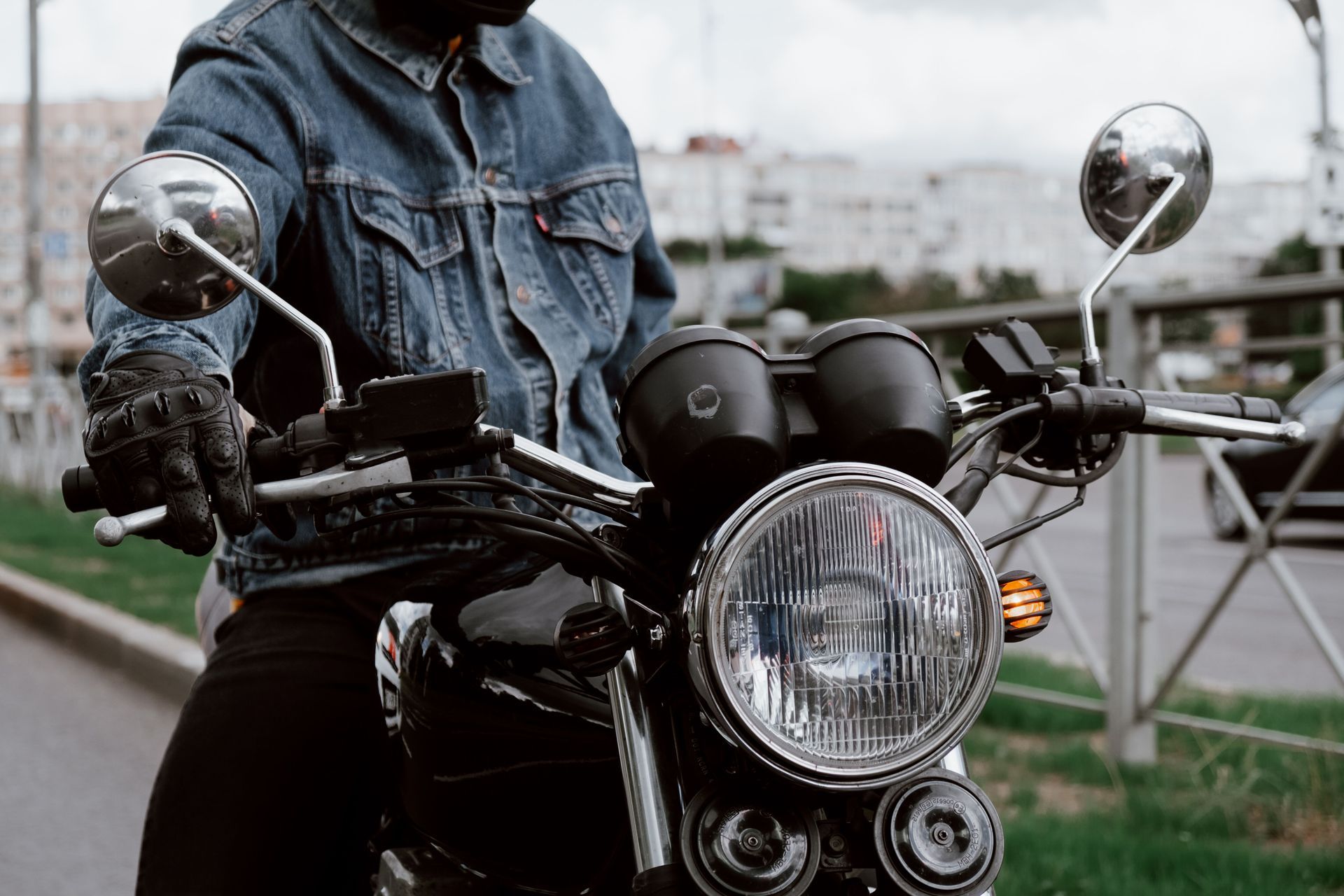
Texas has more registered motorcycles than almost any other state, and a good chunk of them are parked in garages right here in North Texas and Wise County. Warm weather that stretches from March into November, wide-open farm-to-market roads outside Rhome and Decatur, and easy weekend runs up toward Lake Bridgeport or out to the Hill Country make this some of the best riding in the country. It also means motorcycle season in Texas is basically year-round — which is exactly why motorcycle insurance deserves more than a five-minute afterthought.
Here's the problem: most riders assume their bike is covered "close enough" to how their car is covered. It isn't. Motorcycles get into different kinds of accidents, riders absorb different kinds of injuries, and the insurance policy underneath all of it works a little differently than a standard auto policy. If you own a motorcycle in Texas — or you're thinking about buying one — here's what the coverage actually needs to look like.
What Texas law actually requires
Texas treats a motorcycle like any other motor vehicle for liability purposes. If you're going to ride it on a public road, you're required to carry at least the state minimum liability limits:
- $30,000 bodily injury per person
- $60,000 bodily injury per accident
- $25,000 property damage per accident
That's the same 30/60/25 minimum that applies to a car or a pickup truck. It satisfies the law. It does not come close to satisfying reality.
Here's why: on a motorcycle, there's no steel cage, no airbags, and no crumple zone between you and the pavement. When a motorcycle accident causes an injury, it tends to cause a serious injury — a broken femur, a shattered wrist, a traumatic brain injury, months of rehab. A single ER visit and surgery can blow through $30,000 without much effort. If you're found at fault for a wreck that puts someone else in the hospital, state-minimum liability limits can get exhausted fast, and whatever's left of the bill becomes your problem, personally, out of your own assets. That's the gap riders don't think about until they're staring at it.
The coverage that actually protects a rider
Liability above the minimum. Most agents — us included — recommend riders carry liability limits well above 30/60/25, especially if you own a home, have savings, or have anything worth protecting from a lawsuit. Bumping up to 100/300/100 or higher typically costs less than people expect, because the base premium on a motorcycle policy is usually modest to begin with.
Uninsured/underinsured motorist coverage (UM/UIM). This might be the single most important coverage on a motorcycle policy, and it's the one riders skip most often to save a few dollars. Roughly 1 in 7 Texas drivers is uninsured, and when a car pulls out in front of a motorcycle — which is how a huge share of motorcycle accidents happen — the motorcyclist is almost always the one who gets hurt worse, regardless of who's at fault. If the driver who hit you doesn't carry insurance, or doesn't carry enough, UM/UIM is what pays your medical bills instead of you paying them out of pocket. We've written more on how this coverage works and why Texas law requires insurers to offer it in our guide to
uninsured motorist coverage in Texas — it applies to motorcycles the same way it applies to cars, and riders arguably need it more.
Medical Payments (MedPay) or Guest PIP. Health insurance doesn't always play nicely with motorcycle accident claims, and some health plans have exclusions or high-deductible gaps that leave a rider exposed right after a crash. MedPay or Guest Passenger PIP pays medical bills for you and your passenger quickly, regardless of fault, before your health insurance even gets involved. If you ever ride two-up, this coverage protects your passenger too — worth thinking about before your spouse, your kid, or a friend climbs on the back.
Comprehensive and collision. If your bike is financed or leased, your lender will require this. Even if it's paid off, comprehensive and collision protect against theft (motorcycles are stolen at a disproportionately high rate compared to cars), vandalism, hail, and the physical damage from a crash that isn't someone else's fault. Given how often bikes sit outside or in an open carport, comprehensive coverage matters more than owners often realize.
Custom parts and equipment coverage. Aftermarket exhausts, custom paint, saddlebags, upgraded seats, chrome — all of it adds real value that a standard policy won't automatically cover. If you've put money into customizing your bike, ask specifically about a custom parts endorsement so those upgrades are actually insured, not just the factory bike.
Roadside assistance and trip interruption. A flat tire or a dead battery forty miles outside Decatur is a different kind of problem on two wheels than it is in a car. Roadside coverage designed for motorcycles (not just a generic auto tow plan) gets you and your bike home. Trip interruption coverage can reimburse lodging and transportation if a breakdown strands you on a longer ride.
What actually moves the price
Motorcycle insurance pricing depends on a mix of factors that's a little different from car insurance:
- Engine size and bike type. A 250cc commuter bike rates very differently than a 1000cc sport bike. Sport bikes generally carry higher premiums because they're statistically involved in more severe accidents.
- Rider experience and age. New riders and younger riders pay more, the same way new drivers do. A completed motorcycle safety course (Texas offers several state-approved options) can lower your premium and is worth asking your agent about specifically.
- Storage. A bike kept in a locked garage typically rates better than one parked outside or in an open carport, because theft and weather exposure are lower.
- Usage. Year-round commuting rates differently than occasional weekend and seasonal riding. Be upfront with your agent about how you actually use the bike — mischaracterizing usage can create problems at claim time.
- Prior claims and violations. Just like auto insurance, a clean record helps. Texas auto insurance rates overall have moved quite a bit over the past couple of years — we broke down what's been driving that in our post on
2026 Texas auto insurance rates, and the same market pressures (severe weather losses, higher repair and medical costs) touch motorcycle pricing too, even if the increases haven't been as dramatic.
A note on bundling
If you already have a home or auto policy with a carrier, ask whether adding your motorcycle to that same household can save you money. Not every carrier writes motorcycles, and not every carrier that does will give you a meaningful bundle discount — but it's a five-minute question that sometimes pays off, and it's exactly the kind of thing an independent agent can shop around on your behalf instead of you calling three or four companies yourself.
The bottom line
The state minimum on a motorcycle policy is a legal floor, not a safety net. Given how much more physically exposed a rider is in a wreck, and given that roughly 1 in 7 drivers you share the road with in Texas isn't carrying insurance at all, the coverage that actually protects you — liability above the minimum, UM/UIM, MedPay, comprehensive, and the right endorsements for your bike — usually costs far less than people assume, especially when it's shopped across multiple carriers instead of taken as a single quote.
TAP Insurance Agency writes motorcycle policies across Texas and Oklahoma, and we're happy to run your bike alongside your auto and home coverage to see where a bundle or a better carrier fit could save you money. You can see the basics of what we offer on our
motorcycle insurance page, or just give us a call and we'll walk through it together — no pressure, no sales pitch, just a straight answer about what coverage actually fits your bike and how you ride it.
— TAP Insurance Agency · Call (800) 666-2254