If you have shopped for car insurance in the last couple of years, you have almost certainly been offered a deal that sounds too good to pass up: download our app, let it watch how you drive for a few weeks, and we will knock a chunk off your premium. Progressive calls it Snapshot. Allstate has Drivewise. State Farm runs Drive Safe & Save. Most major carriers writing in Texas now offer some version of it.
The industry term is usage-based insurance, or UBI. The technology behind it is telematics, software that measures how, when, and how far you actually drive, instead of estimating your risk from your age, ZIP code, and credit history.
Here in Wise County and across the DFW metroplex, we get asked about these programs constantly. The honest answer is that they are a genuinely good deal for some drivers and a quiet rate increase for others. The difference comes down to how you drive and how far, and most people have no idea which camp they fall into until the monitoring period ends.
What telematics programs actually measure
Most people assume the app is just tracking speed. It measures considerably more than that. The common data points:
Hard braking. This is the single most heavily weighted factor in most programs. Every time you decelerate faster than a set threshold, the app logs an event.
Rapid acceleration. Quick starts off the line at a green light.
Cornering forces. Sharp turns taken at speed.
Time of day. Driving between roughly midnight and 4 a.m. is scored as higher risk regardless of how carefully you do it.
Total mileage. How many miles you put on the vehicle during the monitoring window.
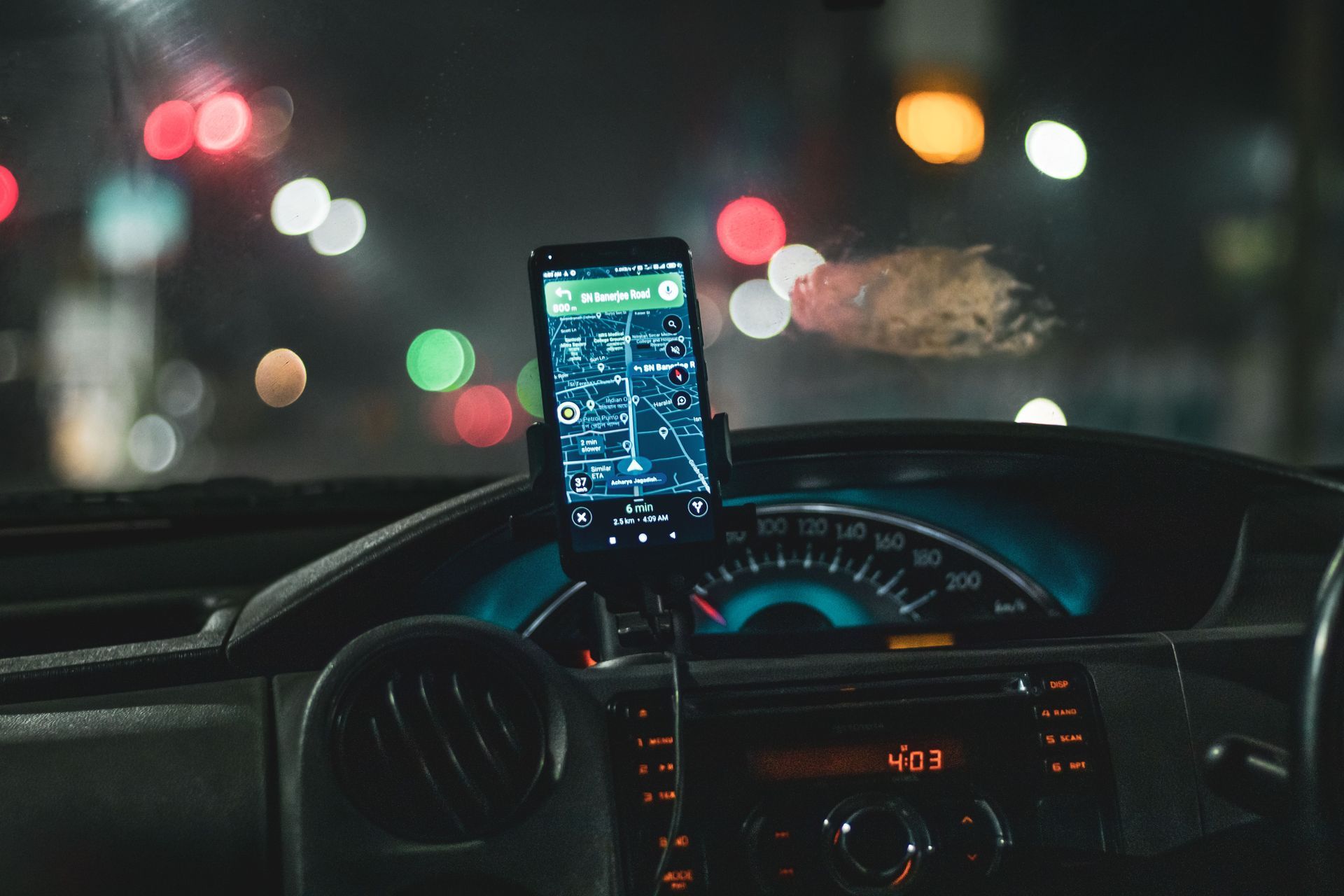
Phone handling. Newer app-based programs detect whether the phone was being handled while the vehicle was moving.
Some carriers use a plug-in device for the OBD-II port under your dash instead of a phone app. The device version generally does not track phone handling, which matters if you use your phone as a mounted GPS.
Who actually saves money
Participation discounts typically run 5 to 15 percent just for enrolling. The real number arrives after the monitoring period, usually 90 days to six months, and can range from a few percent up to roughly 40 percent off depending on the carrier and your score.
The drivers who consistently do well are these:
Low-mileage drivers. Retirees, remote workers, and anyone under about 8,000 miles a year. Mileage is heavily weighted and it is the one factor you cannot talk your way around.
Off-peak commuters. If your schedule keeps you off the road during rush hour, you avoid most of the situations that generate hard-braking events.
Rural and small-town drivers. Open roads around Wise County produce far fewer braking events than stop-and-go traffic on I-35W.
Drivers with a rough record. If you have a ticket or an at-fault accident on your file, telematics gives you a way to demonstrate how you drive today instead of waiting three years for the violation to age off.
Who usually should skip it
Heavy DFW commuters. This is the big one. If you drive 121, I-35E, or the LBJ interchange twice a day, you will generate hard-braking events constantly. Not because you are careless, but because the traffic around you forces it. The algorithm cannot tell the difference between an unsafe driver and a careful driver surrounded by unsafe drivers.
High-mileage drivers. Sales reps, contractors running between job sites, and anyone regularly over 15,000 miles a year.
Households sharing one vehicle. App-based programs often cannot tell who is behind the wheel. If your teenager drives the same car, their habits land on your score. And if you ride as a passenger in someone else's car, some apps log the trip as yours unless you manually flag it.
Night-shift workers. The late-night penalty applies whether you are driving home from a hospital shift or anywhere else.
The part carriers do not advertise
Three things are worth knowing before you enroll.
Your rate can go up. Many carriers offer programs where the worst case is simply losing the participation discount. Not all of them work that way. Ask directly whether the program is discount-only or whether your score can raise your premium at renewal.
The data may follow you. Some carriers retain telematics data and reference it at renewal. Policies on retention and third-party sharing vary quite a bit between companies, so it is a fair question to ask before you install anything.
You can usually opt out, but timing matters. Most programs let you withdraw, though you forfeit the discount when you do. Leaving mid-term is generally cleaner than dropping out right before renewal.
Texas-specific considerations
Texas does not restrict telematics-based rating the way a handful of other states do. Carriers here have fairly wide latitude in what they measure and how heavily they weight it. That cuts both ways. The discounts available in Texas are often larger than in tightly regulated states, but the scoring is also less standardized from carrier to carrier, which makes comparing offers harder than it looks.
It is also worth remembering that telematics only affects your rate. It does not change your coverage. An excellent telematics score on a liability-only policy still leaves you paying out of pocket if you total your own vehicle, which is a separate decision we walk through in
full coverage vs. liability-only.
How to decide
Try this before you enroll. For two weeks, pay attention to how often you brake hard. Just count roughly. If you are hitting the brakes sharply more than a few times per drive, a telematics program will likely score you as a moderate-risk driver no matter how safe you actually are. Much of that comes down to the roads you are on rather than your skill, which is why
your DFW commute affects your car insurance rate more than most drivers realize.
Then check your mileage. Pull your last inspection or oil change record and compare that odometer reading to today. If you are meaningfully under 10,000 miles a year, telematics is probably worth trying.
And if you are not sure, that is exactly the kind of question worth asking an independent agent, because we can weigh what a telematics discount is worth at one carrier against what a different carrier would simply charge you outright. Sometimes the second option wins. There are also
several car insurance discounts DFW drivers forget to ask about that require no monitoring at all.
The bottom line
Usage-based insurance is not a gimmick, and it is not a trap. It is a pricing tool that rewards a specific driving profile: low miles, smooth inputs, daytime hours. If that describes you, it is one of the largest discounts on the table. If it does not, you are probably better served by a carrier whose base rates already reflect your situation.
At TAP Insurance Agency, we shop multiple carriers rather than steering you toward any one company's program. If you want a straight answer about whether telematics would help or hurt in your case, we are glad to run the numbers with you.
Call or text (800) 666-2254 or visit tapinsuretx.com for a free quote.