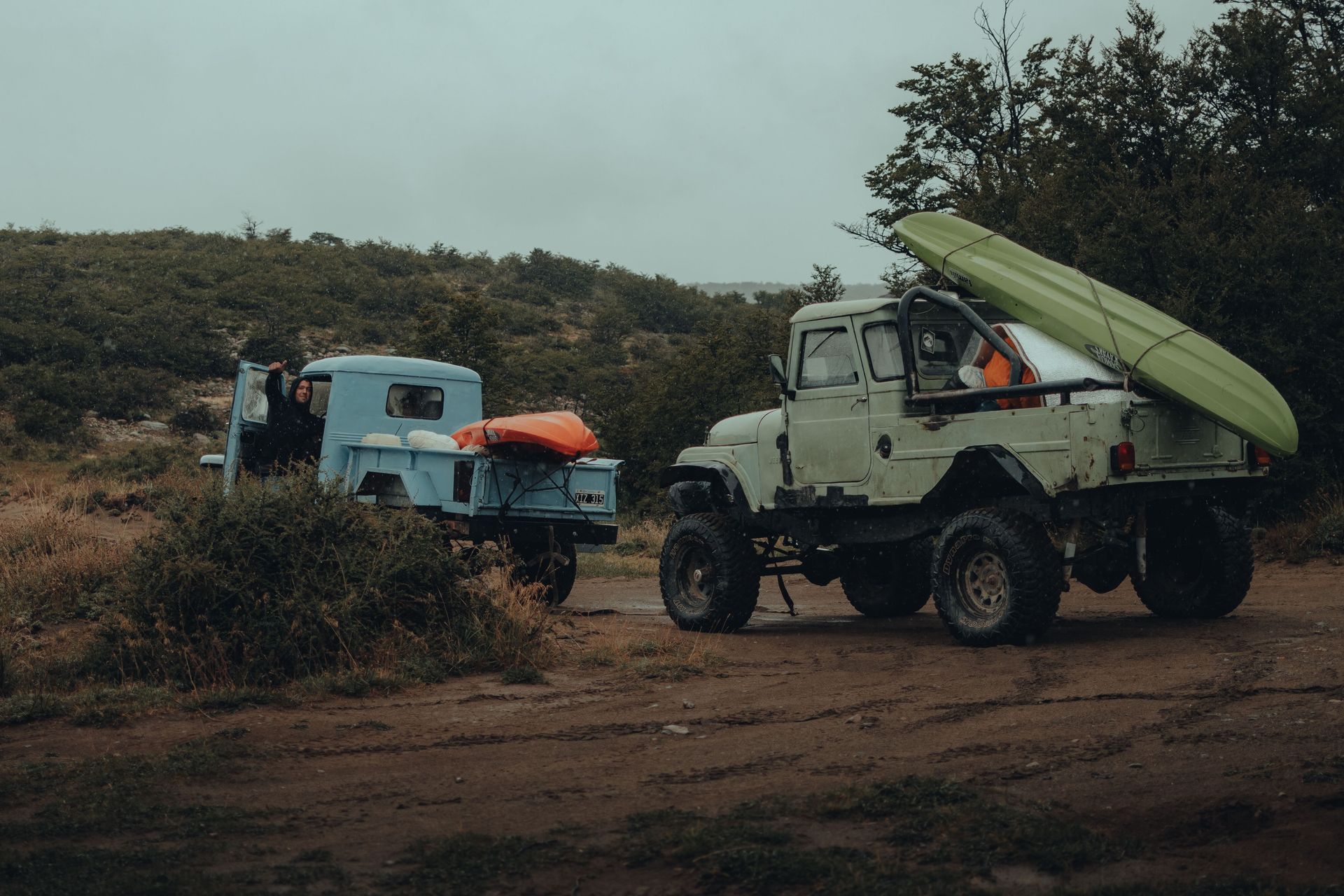
Wade keeps an old F-250 out at his place near Boyd, and it does exactly one job: hauling gear to the deer lease every fall. The truck has sat parked under the carport since January.
The whole time, Wade has paid for the same coverage on that truck that he carries on the pickup he drives to work five days a week. With hunting season coming back around, it finally occurred to him to ask whether that made sense.
Wade's situation is common across North Texas. A hunting truck, a project car up on jack stands, a spare pickup kept around for towing a trailer twice a year — these vehicles spend most of the year sitting still, and a standard auto policy rarely has a setting built for "parked."
The vehicles that mostly sit
Full coverage makes sense for a vehicle that's driven every day. Liability protects the other drivers on the roads it shares with them, and collision covers the wreck that can happen on any given commute.
A truck that leaves the property six weekends a year for a hunting lease is a different risk profile, even though it usually sits on the exact same policy structure by default. The mismatch isn't about whether the truck deserves coverage. It's about paying for protection the vehicle barely uses, while the coverage it needs most — protection while it sits parked — often isn't the point of a standard policy at all.
The pattern shows up with any vehicle tied to a season instead of a daily routine. A project car covered by
classic car insurance might only see daylight for a couple of shows each summer, and a boat comes off the trailer for a few months before it goes back on blocks. The thread running through all of them is the same: long stretches parked, bookended by short bursts of real use.
What comprehensive-only coverage actually protects
This is where comprehensive-only coverage, sometimes called storage coverage, comes in. A parked vehicle can still burn in a shop fire, flood in a heavy rain, get stolen out of a driveway, or take hail damage sitting out in the open.
Comprehensive-only coverage protects against exactly those risks, without charging for the liability and collision protection a parked vehicle isn't using. It's a different product than simply dropping a vehicle to state minimum coverage — minimum liability protects other people if the vehicle causes a wreck, while comprehensive-only protects the vehicle itself from what can happen to it while it sits still.
Deductibles work the same way they would on a full policy. The owner still picks a deductible amount, and a claim for hail or theft gets adjusted the same way a standard comprehensive claim would be, since the only real change is that the policy is no longer pricing in the risk of the vehicle being driven.
The catch: it can't touch a public road
There's one hard rule attached to comprehensive-only coverage, and it isn't negotiable. A vehicle carrying comprehensive-only cannot legally be driven on a public road — not to the gas station, not around the block, not for a quick errand.
No liability coverage means no legal right to be on a road where other traffic exists. That makes comprehensive-only a strong fit for a vehicle that genuinely stays parked between trips, and a poor fit for anything driven even occasionally. A lienholder, for what it's worth, will require comprehensive and collision coverage on a financed vehicle no matter how rarely it leaves the driveway.
Before switching a vehicle over, it's worth being honest about how it actually gets used the rest of the year. A vehicle on comprehensive-only is still fully insured against fire, theft, and hail while it sits — it just has no coverage at all for the act of driving it, and that's the trade a storage policy is built around.
Registration, TexasSure, and the lapse trap
Texas runs a verification program called TexasSure that cross-checks vehicle registrations against active liability coverage. Dropping liability on a vehicle that's still registered can trigger a mismatch, and that mismatch can carry registration and license consequences down the line.
Texas law sets a 30/60/25 minimum for liability coverage on any vehicle that's registered and driven, and that floor doesn't bend just because a truck only moves twice a year. The bigger risk isn't the coverage question at all — it's letting a policy lapse entirely instead of switching it over on purpose.
A gap in coverage, even on a vehicle that never left the carport, follows a driver's history and can affect rates on every other policy down the line. Comprehensive-only coverage, kept continuously in place, sidesteps that problem completely. The same registration-and-lapse question follows an RV stored over the winter, which is part of why
RV insurance decisions look a lot like the ones a hunting truck owner has to make.
Low-mileage and usage-based options if it still drives some
Not every seasonal vehicle sits completely still. A truck that runs errands a handful of times a month, or gets driven out to the lease and back over a long weekend, isn't always a clean fit for comprehensive-only.
Low-mileage programs and usage-based options exist for vehicles in that middle zone — driven occasionally, but nowhere close to daily-driver mileage. The same middle-zone thinking applies to
ATV insurance on a four-wheeler that only comes off the trailer during deer season but still gets ridden a handful of times before opening weekend.
These options keep full coverage in place, including liability, while accounting for mileage that's nowhere near what a commuter vehicle racks up. The right answer depends on how the vehicle actually gets used, not on which option sounds simplest on paper.
Switching back on before hunting season
Timing matters as much as the coverage type does. A vehicle sitting on comprehensive-only needs full coverage back in place before it turns onto a public road again, and that means before the first trip out to the lease, not after.
A quick rule of thumb: if there's a date circled on the calendar for opening weekend, put a reminder next to it to call about coverage a week ahead, not the morning gear gets loaded. That gives an agent time to get the policy switched before the truck ever needs to leave the carport.
Coordinating that switch with an agent who knows the difference between comprehensive-only and full coverage means the truck is legally covered exactly when it needs to be. The other ten months of the year, it isn't carrying coverage it doesn't need.
Call (800) 666-2254 — or text QUOTE to (817) 646-6700 · tapinsuretx.com
Educational only; coverages and availability vary by carrier. TAP Insurance Agency, PLLC — Rhome, TX, licensed in Texas and Oklahoma.