A mower, a trailer, and a couple of crews can put a lawn business on a lot of other people's property in a single week. Here's what a Texas landscaping outfit actually needs on the policy before something breaks.
Ray started mowing yards in Decatur with one zero-turn and a borrowed trailer. Four seasons later he has two crews, three trucks, a skid steer he rents when a job calls for it, and a spring schedule that runs from Bridgeport down to Justin. What he doesn't have is an insurance program that grew with any of that. He's still carrying the general liability policy he bought when it was just him, and his trucks are on a personal auto policy that lists "commuting" as the vehicle use.
That's a very common place for a North Texas lawn and landscaping business to land. The work scales fast, the paperwork doesn't, and the gap usually only shows up when a rock leaves a mower deck at highway speed or a customer's sprinkler line gets sliced by an aerator. This is a walk through the
business insurance a lawn care or landscaping company in Wise, Denton, Tarrant, or Parker County should have in place, from general liability to
workers compensation, and where the common holes are, starting with the tools and equipment most crews assume are covered and aren't.
General liability: the rock through the window
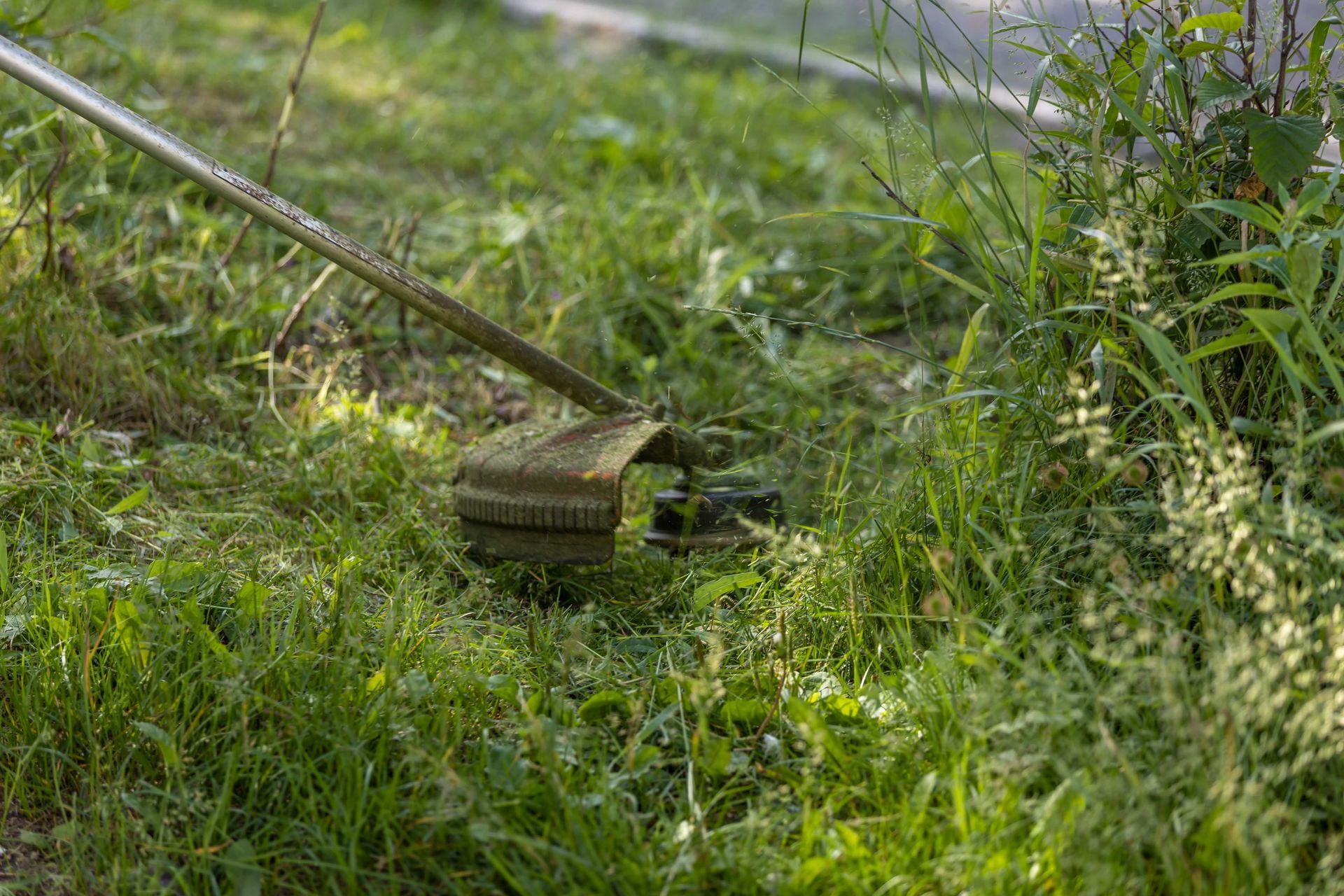
General liability is the foundation of any landscaping insurance program, and for good reason. The classic lawn-care claim is exactly what you'd guess: a mower throws a rock or a chunk of debris and it goes through a customer's bay window, into a parked car, or, worst case, into a person. General liability responds to bodily injury and property damage you cause to third parties in the course of the work.
It also covers the less dramatic stuff that adds up. A crew member backs a trailer into a mailbox. A hedge trimmer nicks a gas meter. A customer trips over a line trimmer left across the walkway. Most commercial customers, and every HOA and property management company we've seen, will require proof of general liability before they let a crew on the property, and many want to be named as an additional insured on the policy.
Two things to watch on a landscaping GL policy. First, some carriers exclude or limit coverage for herbicide and pesticide application. If your crews spray, even just pre-emergent in the spring, you need to confirm that pesticide and herbicide applicator coverage is on the policy, and Texas requires a commercial applicator license for most of that work anyway. Second, ask about coverage for damage to the property you're actually working on. Standard GL has a "care, custody, or control" exclusion, so damage to the very lawn or bed you were hired to work on can fall into a gap unless the policy addresses it.
Commercial auto: the trucks are not "commuting"
This is the single most common problem we find when a lawn business calls for a review. The trucks are on a personal auto policy. Personal auto policies are written and priced for personal use, and most of them exclude vehicles used in a business, especially ones hauling trailers full of equipment to job sites every day. If a crew truck causes a wreck on US 380 with a 16-foot trailer behind it, a personal auto carrier has every reason to look hard at how that vehicle was really being used.
Commercial auto fixes that. It rates the vehicle for business use, it can list the business as the named insured so the coverage follows the company rather than one individual, and it can be written to cover trailers being towed. That last part matters more than people expect. In Texas, liability coverage generally extends from the towing vehicle to the trailer while it's attached, but physical damage to the trailer itself, and to what's on it, usually does not. If the trailer is worth $6,000 and the equipment strapped to it is worth $25,000, that's a lot of value riding on an assumption.
If you have employees who ever drive their own vehicles for the business, running to the supply house or swinging by a job to check on a crew, hired and non-owned auto coverage closes the gap for the business's liability when that happens.
Equipment: where most of the money actually is
For a lot of landscaping companies, the trucks aren't the biggest asset. The equipment is. Commercial mowers run several thousand dollars apiece, and by the time you add trimmers, blowers, edgers, a stump grinder, and maybe a small skid steer, a two-crew operation can easily have $40,000 to $80,000 in gear sitting on trailers overnight.
General liability doesn't cover your own equipment. Commercial auto doesn't cover what's on the trailer. The coverage that does is usually called inland marine or contractor's equipment coverage, and it follows the equipment wherever it goes: on the trailer, at the job site, or in the shop. It responds to theft, which is the big one for landscapers. Trailers get cut loose from behind shops and hotel parking lots in DFW constantly, and a stolen enclosed trailer full of mowers can end a season. We covered how this works for trades in general in our guide to tools and equipment insurance for Texas contractors, and the same logic applies here.
When you set this up, be honest about the numbers. Equipment coverage is written on a schedule or a blanket limit, and if the limit is $20,000 because that's what you owned two years ago, a $60,000 theft leaves you paying the difference.
Workers' comp: optional in Texas, and still worth a hard look
Texas is the only state where most private employers can choose not to carry workers compensation. Plenty of lawn businesses run as non-subscribers. Before you decide that's the right call, know what the trade is. A landscaping crew works with blades, chemicals, heavy equipment, and Texas heat for eight to ten hours a day. It's one of the higher-injury trades out there. A non-subscriber that gets sued by an injured employee loses several key legal defenses it would otherwise have, and a serious injury lawsuit can cost far more than a few years of premium would have.
There's also a practical angle: more and more commercial property managers, municipalities, and general contractors won't hire a landscaping sub that isn't a workers' comp subscriber. If you're chasing commercial accounts, a workers' comp certificate can be the difference between getting the bid packet back and not.
The smaller pieces that round it out
A few coverages don't apply to everyone but are worth asking about. If you install irrigation, hardscape, or outdoor lighting, ask about completed operations coverage under your GL, which responds when something you installed fails months later. If you ever design landscapes for a fee, a small professional liability policy covers the advice side of the business. If you keep chemicals, fuel, and equipment at a shop or a yard, a commercial property policy or a business owner's policy covers the building and contents. And if you carry commercial contracts with high limit requirements, a commercial umbrella stacks additional liability on top of both GL and auto for less than you'd expect.
What a review looks like
When a landscaping company sits down with us, we're usually asking the same handful of questions. How many crews and trucks? Do you spray? What's the total replacement value of the equipment on the trailers right now? Do you have employees, and are any of them driving? Who are your biggest commercial customers and what do their contracts require? From there, we shop the full program across the carriers we work with that write landscaping and lawn care risks in Texas, and put together business insurance that actually matches the operation instead of the one-man version it started as.
Ray's review took about twenty minutes. He moved the trucks to a commercial auto policy, scheduled the equipment at its real value, and added applicator coverage he didn't know he was missing. His total premium went up, but not by nearly as much as one stolen trailer would have cost him, and he can now bid the HOA contracts that had been asking for certificates he couldn't produce.
Call or text (800) 666-2254, or visit tapinsuretx.com for a free quote on your lawn care or landscaping business.
Educational only; coverages and availability vary by carrier. TAP Insurance Agency, PLLC, Rhome, TX, licensed in Texas and Oklahoma.