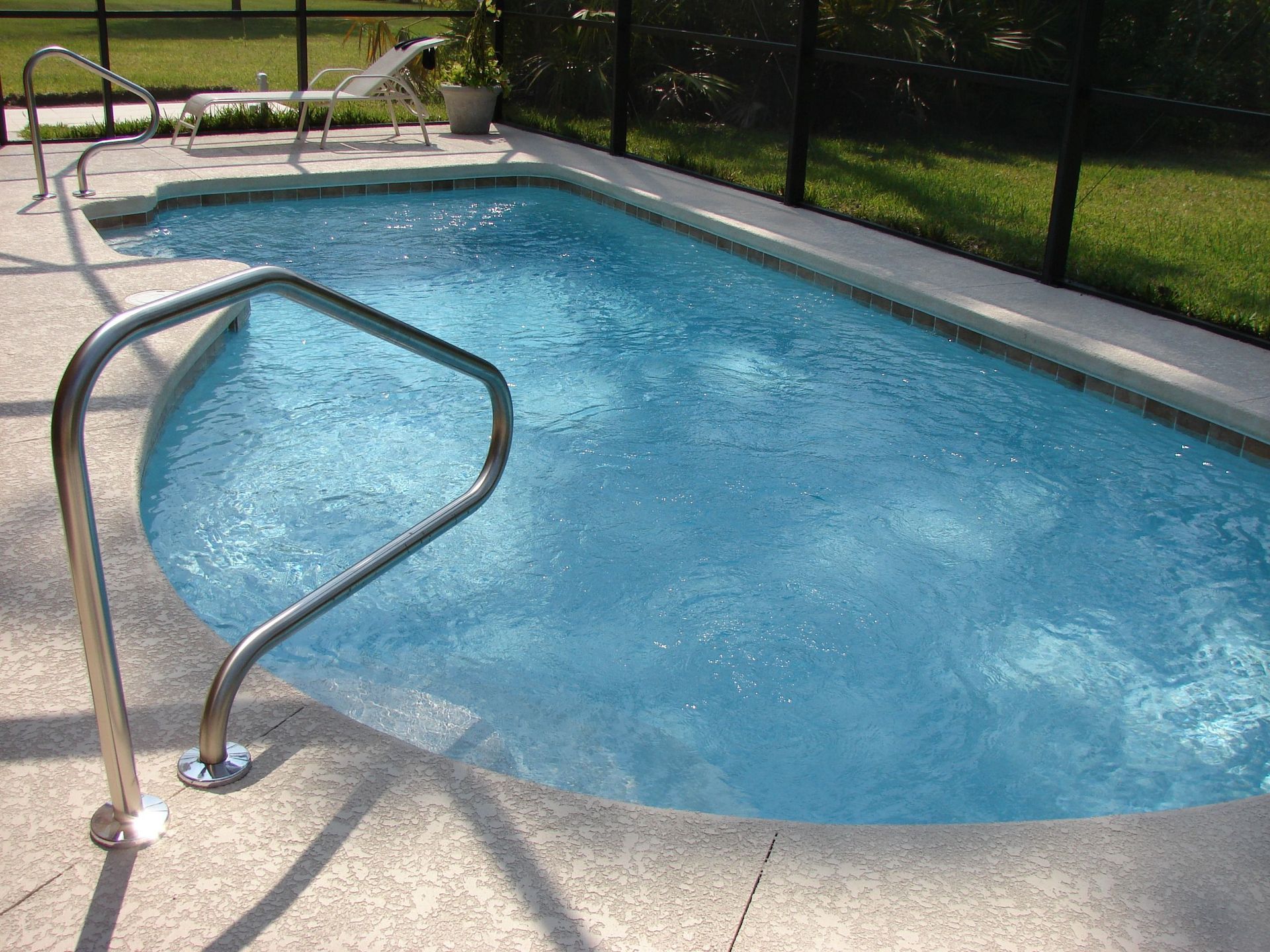
Memorial Day weekend in Texas means three things: barbecue, brisket, and a backyard full of folks who suddenly want to know your pool depth. If your Texas homeowners policy is the last thing you’ve reviewed before the season kicks off, you’re in good company — most homeowners don’t think about pool coverage until something goes wrong. The trouble is that “something” can be expensive.
Texas insurance carriers consistently list backyard swimming pools as one of the highest residential liability exposures they underwrite. A drowning, a slip, a diving injury — any of these can lead to a six- or seven-figure claim, and the way your homeowners policy is written today determines how much of that claim actually gets paid.
Before the first cooler is opened on Saturday, pull out your declarations page and check these five things.
1. What Liability Limit Are You Carrying?
Most Texas homeowners default to $100,000 or $300,000 in personal liability coverage. For a household with no pool, that may be reasonable. For a household with a pool — and especially a pool that gets used by neighbors, friends, or anyone other than the immediate family — those limits can disappear in a single bad afternoon.
A pool-related drowning claim regularly exceeds $1,000,000 once you account for medical costs, wrongful death damages, and legal defense. If your liability limit is $100,000, the rest comes out of your assets — your home, your savings, your future income. Texas is not a homestead-protected state when it comes to civil judgments for personal injury.
The fix is almost always cheaper than the risk: bump your homeowners liability to $500,000 if your carrier allows, and add a personal umbrella policy on top. A $1,000,000 umbrella for a typical Texas family with one home, two cars, and a pool usually runs $250–$450/year. That’s roughly the cost of a pool float lounger and worth dramatically more when the moment matters.
2. Is Your Pool Properly Disclosed to the Carrier?
This is the one most likely to trip you up. Many Texas homeowners purchased their policy before the pool was installed, or before the diving board, or before the slide, and never updated the carrier. If a claim happens and the carrier learns about an undisclosed exposure, they may deny the claim, non-renew the policy, or both.
Carriers also have specific rules about pool features they consider higher risk:
- Diving boards (many carriers will not write coverage if a diving board exists)
- Pool slides, especially homemade or installed without permits
- Above-ground pools without proper ladders or safety covers
- Pools without a fully enclosed, four-sided fence at least 4 feet tall (this is the Texas standard)
- Pools without a self-closing, self-latching gate
If you’ve added or removed any of these features since the policy was written, call your agent. A 10-minute update now is significantly better than a denied claim later.
3. Does Your Policy Cover the Pool Itself, or Just the Liability?
Liability coverage protects you from lawsuits if someone gets hurt. It does not automatically pay to repair or replace the pool itself if a tornado, hailstorm, falling tree, or freeze damages it. That’s a property coverage question.
In Texas, pools are typically covered under “Other Structures” (Coverage B), which usually defaults to 10% of your dwelling coverage. On a $400,000 home, that’s $40,000 of Other Structures coverage — split among your fence, shed, detached garage, AND your pool. A serious hailstorm or a freeze that cracks pool tile and equipment can easily exceed that.
If your pool is worth $50,000+ to rebuild (and most North Texas in-ground pools are), ask your agent to either increase your Other Structures limit or add a scheduled rider specifically for the pool and its equipment. The annual premium increase is usually small. The claim recovery difference can be substantial.
4. What About Hail and Freeze Damage to the Pool Equipment?
Texas pool owners learned the hard way during Winter Storm Uri in 2021 that pool pumps, heaters, and plumbing can suffer serious freeze damage — and many homeowners discovered their HO policy wouldn’t fully cover it because the equipment was treated as “Other Structures” with a separate (sometimes higher) deductible.
And every spring, hail dings pool pumps, cracks pool screens, damages pool deck cool-coat, and breaks attached pergolas. If your hail deductible is 1% or 2% of your dwelling value, you may be looking at $4,000–$8,000 out of pocket before the carrier pays anything.
This is exactly the kind of risk where a separate
wind/hail deductible offset policy earns its keep. It pays you a separate cash benefit when a qualifying storm hits, which you can apply to your homeowners deductible — bridging the gap between what your HO policy doesn’t pay and what your bank account is willing to absorb.
5. Is the Pool a Short-Term-Rental Risk?
If anyone in your household has ever rented out the home (or the pool itself) on Airbnb, Vrbo, Swimply, or even an informal “$50 to use the pool for the day” arrangement with neighbors, your standard homeowners policy almost certainly excludes the resulting liability.
This is non-negotiable for most Texas carriers. Once you turn the pool into a business activity, you need either a commercial general liability policy or, at minimum, a homeowners endorsement that contemplates the rental use. If a guest is injured during a short-term-rental pool use and your carrier finds out, the claim gets denied and the policy often gets non-renewed.
If you’ve ever rented the pool — even informally — call the agency. We have markets that write hybrid coverage for limited rental exposure, and getting it on the policy now is much cheaper than getting it on the policy after a claim.
The Five-Minute Memorial Day Pool Audit
Before Saturday’s first cannonball, ask yourself:
- Liability limit on my HO policy is at least $300,000? (Better yet, $500,000 plus an umbrella.)
- Carrier knows about the pool, the fence, and any diving board or slide? (Update if not.)
- Other Structures limit is enough to rebuild the pool? (Schedule it if borderline.)
- Hail deductible won’t bankrupt me on a storm claim? (Look at a Sola deductible offset.)
- I never rent out the pool, or if I do, my policy specifically allows it?
If any of those are “no” or “I’m not sure,” that’s the call worth making before the weekend. We can walk your declarations page with you in about 15 minutes — no obligation, no upsell, just a clean review.
Reach the agency at
(800) 666-2254, text
817-646-6700, or request a homeowners review at
tapinsuretx.com/home-insurance. We’ll have your policy reviewed before the brisket comes off the smoker.
Have a safe Memorial Day weekend out there. The point of a backyard pool is to enjoy it — not to lose sleep over what happens if someone gets hurt in it.