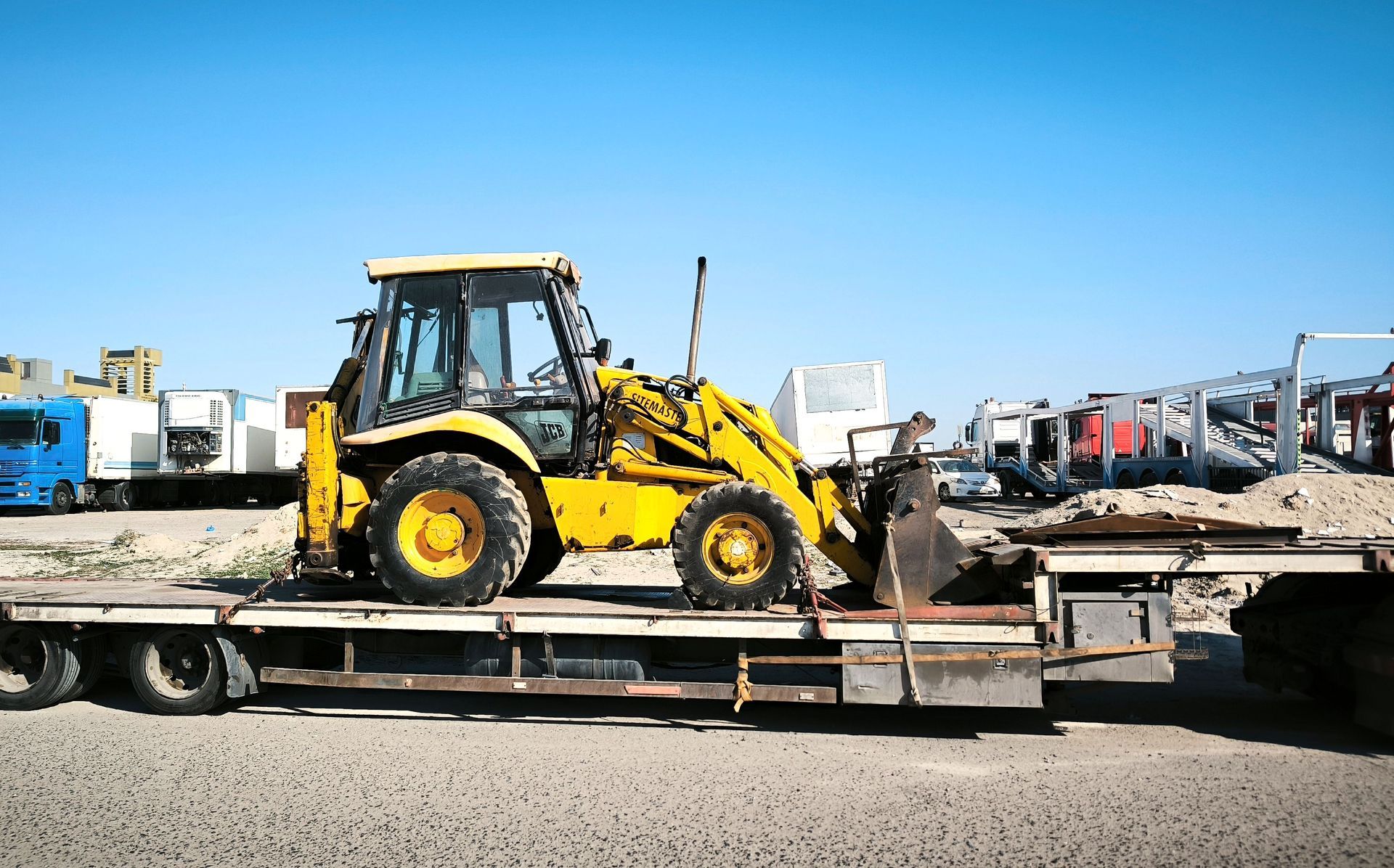
Take a common situation: a hotshot operator out of Jacksboro has run his one-ton dually well under the CDL weight line for two years, no CDL required, and figures that settles every weight question his authority will ever face. Then a broker offers him a standing run hauling oilfield parts up into southern Oklahoma, and the first question at pickup isn't about his CDL at all. It's whether his truck carries apportioned registration.
Apportioned, or IRP, registration and the 26,001-pound CDL threshold
are two separate rules triggered by two different things. A rig can run well under that CDL line and still need apportioned plates the moment it operates in two or more states, because IRP turns on multi-state use and weight, not on the same math that decides who needs a CDL.
That's the gap that catches operators off guard. The CDL threshold gets talked about constantly in hotshot circles, so it's easy to assume it's the only weight rule that matters. Apportioned registration runs on its own separate track, administered by a different agency, answering a different question entirely.
Two different rules, two different agencies
The CDL threshold is a federal driver-licensing rule, enforced through FMCSA and the state agency that issues commercial licenses. It decides whether the person behind the wheel needs a commercial driver's license, based on the combination weight rating of the truck and trailer together. Apportioned registration is a state vehicle-registration and fee-sharing system, administered separately through TxDMV's IRP office, that decides how a commercial vehicle is registered and plated once it regularly crosses state lines. One question is about the driver. The other is about how the vehicle itself is registered. They share a weight number in the same neighborhood, and that overlap is exactly why the two get conflated.
The CDL threshold. A federal driver-licensing rule: once gross combination weight hits 26,001 pounds with a towed unit rated over 10,000 pounds, the driver needs a commercial driver's license, regardless of how many states the truck runs in.
Apportioned (IRP) registration. A state vehicle-registration system: it applies based on multi-state use and weight, independent of whether the driver needs a CDL, and it's handled through TxDMV rather than through driver licensing.
What actually triggers apportioned registration
The public rule is straightforward once it's separated from the CDL conversation. Apportioned registration applies to a vehicle used in two or more jurisdictions with a gross or registered weight over 26,000 pounds, or with three or more axles regardless of weight, or as part of a combination whose total exceeds 26,000 pounds. A rig that never leaves Texas doesn't need it at all. Single-state, Texas-only operation stays on standard Texas registration no matter how heavy the rig is.
That's the piece that surprises operators who've only ever thought about the CDL number: IRP has its own weight trigger, close to the CDL line but not identical to it, and it turns on multi-state use in a way the CDL rule never considers. Confirm exactly how these thresholds apply to your specific rig and operating pattern with TxDMV's IRP office directly, since registration decisions are made vehicle by vehicle and this post is general guidance, not a filing determination.
The weight-rating side of the question hasn't moved
None of this changes how the CDL question gets answered.
GVWR and GCWR weight ratings are still what determines whether a driver needs a commercial license in the first place, and that math doesn't shift depending on how many states the truck operates in. IRP sits alongside that question as a completely separate registration decision, not a replacement for it and not a second version of it. A rig can pass one test, fail the other, or trigger both at once, and the only way to know is to check each rule on its own terms.
Why a rig can stay under the CDL line and still need apportioned plates
This is the exact scenario that catches hotshot operators: a dually and gooseneck combination that never touches 26,001 pounds, so no CDL is required, can still meet IRP's own weight and multi-state triggers once it starts running loads into Oklahoma or any other neighboring state on a regular basis. The two thresholds sit close enough in size to feel like the same rule, and measure different enough things, that assuming one settles the other is a real, common mistake.
An operator who has only ever run Texas-only loads has never had a reason to think about IRP at all, and that's exactly why the question tends to surface for the first time only after out-of-state freight has already become part of the regular business, not before it.
The compliance gap that shows up on the insurance side
Registration itself isn't insurance, and apportioned plates don't buy coverage the way a policy does. But a registration mismatch, a rig running multi-state without the apportioned plates its operating pattern actually requires, is exactly the kind of gap a carrier's own authority audit or a roadside inspection can flag, and a flagged compliance issue has a way of turning into an insurance conversation fast, even though the two systems are administered separately.
The pattern we see in this kind of file is a registration set up years earlier around Texas-only lanes, never revisited once Oklahoma runs become a regular part of the week. When that mismatch surfaces during a routine authority audit, well before it becomes a claims problem, that's the outcome worth aiming for.
Confirm your registration matches how you actually run
The practical fix is a single phone call, made before a new lane starts rather than after a dispatcher, an auditor, or a roadside inspector asks the question first. Confirm with TxDMV's IRP office whether your current registration matches your actual operating pattern, single-state or multi-state, before adding an out-of-state lane, not once it's already part of your regular week.
That same review is a good moment for a broader conversation about
commercial trucking insurance, since a registration change is often the same moment a coverage territory, a cargo limit, or a bobtail endorsement needs a second look too.
Call
(800) 666-2254 — or text
QUOTE to
(817) 646-6700 · tapinsuretx.com
Educational only; coverages and availability vary by carrier. TAP Insurance Agency, PLLC — Rhome, TX, licensed in Texas and Oklahoma.