A hotshot operator taking on his first car-hauling loads sent us his prior carrier's paperwork for a second look this month. It answered three things clearly — what he could haul, at what radius, and that golf carts and UTVs weren't covered commodities at all. It left seven other questions completely unanswered, and the one he needed most sat right at the top of that list: whether cargo coverage responded at all during loading and unloading, specifically winch-loading a vehicle that can't drive itself onto the trailer.
Yes, hauling a non-runner changes the insurance conversation. Winch-loading raises the odds of contact damage during the load itself, pre-existing damage on a car that already doesn't run is harder to document, and a disabled vehicle often sits on the trailer longer, extending the theft exposure a moving car never carries in the same way.
We've written separately about how cargo coverage works for Texas car haulers generally, including the limits brokers commonly require and the gaps that show up on a standard policy. This piece narrows in on the one scenario that changes that math the most: the load that can't drive itself on or off.
A running load and a non-runner load are not the same risk
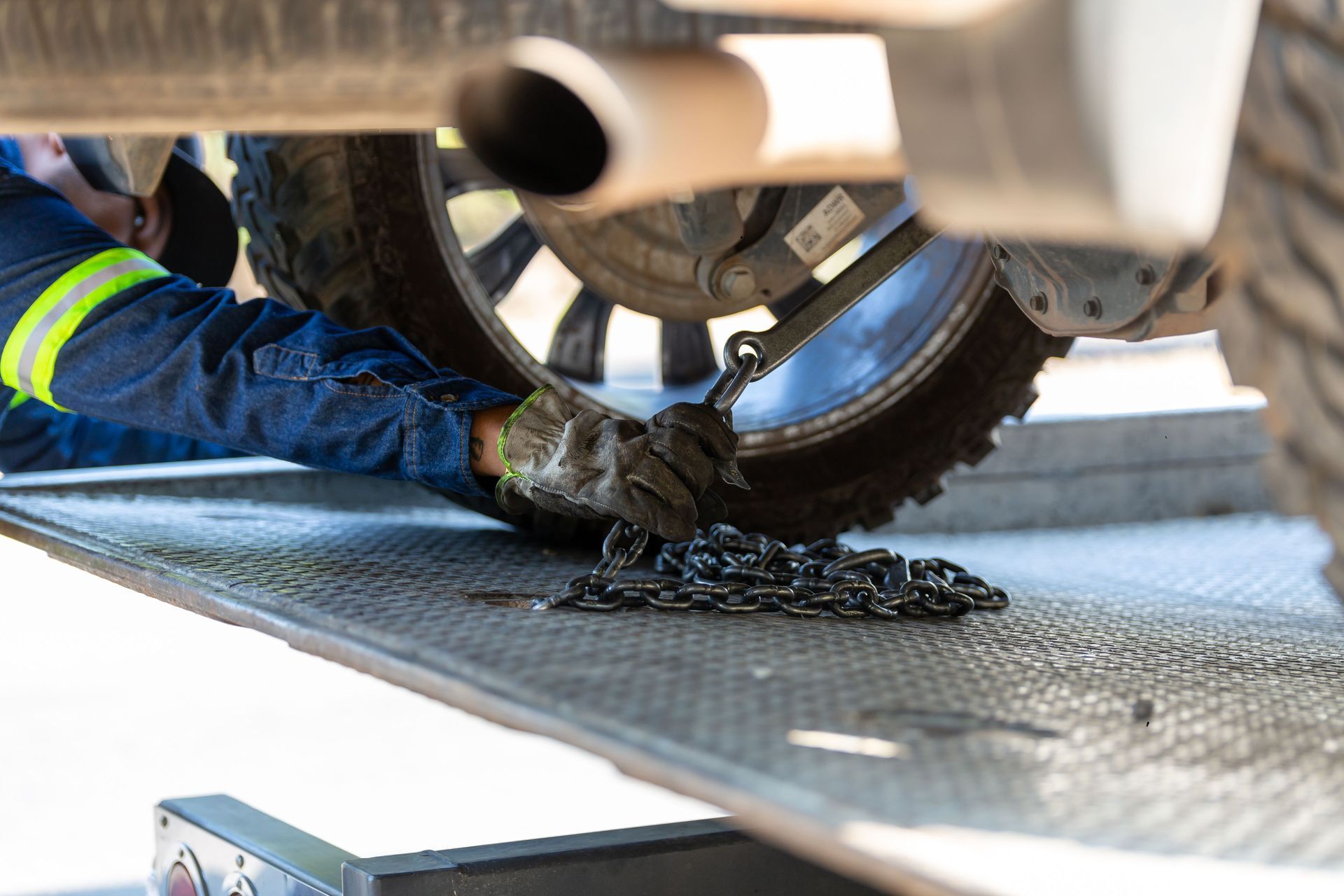
A running vehicle drives onto the trailer under its own power, straps down in minutes, and creates one real moment of exposure — the drive-on itself. A non-runner has to be pulled, pushed, or winched into position, which means more time in contact with the ramps, more chances for a strap or hook to slip, and an operator physically closer to a two-ton object that isn't steering itself.
Running vehicle. Self-loads under its own power, minimal handling time, straightforward condition documentation because the engine, transmission, and electronics can all be checked by driving it.
Non-runner. Requires a winch, a tow dolly, or manual pushing to load and unload, more handling time and contact points, and condition documentation that has to rely entirely on a visual inspection since nothing can be started or driven to confirm it works.
Why cargo coverage doesn't automatically follow you through the whole trip
Motor truck cargo insurance is supposed to cover the vehicles you're hauling against damage or loss while they're in your care, custody, and control — but not every policy treats loading and unloading the same as the highway miles in between. Some forms sublimit or exclude damage that happens specifically during the loading process, which is exactly when a winch cable, a chain, or a ramp angle is most likely to cause the contact damage a non-runner is most at risk for. Ask the question directly: does this policy's cargo coverage apply during loading and unloading, or only once the vehicle is strapped and the trailer is moving?
Weight is part of the non-runner conversation too
A non-runner often rides heavier than a comparable running vehicle once it's strapped to a car-hauling trailer built to carry it, and stacking two or three non-runners on one combination can push the total closer to a weight threshold than a hauler expects. We've laid out
how GVWR and GCWR actually decide whether a combination needs a CDL separately, and it's worth running that math on a loaded non-runner trip the same way you would on any other hotshot combination, not just on paper weights that assume everything self-loads and drives light.
Pre-existing damage is a documentation problem before it's an insurance problem
A running vehicle gets a quick walk-around and a test drive that confirms the mechanicals work. A non-runner offers none of that — you're documenting a car you can't start, can't move under its own power, and often can't fully inspect underneath without lifting it. A thorough condition report at pickup, with time-stamped photos of every panel, the odometer, and any visible damage, is the only real defense against a dispute over what happened on your trailer versus what was already there when you hooked up.
Carriers underwriting cargo coverage for non-runner-heavy operations increasingly ask for proof that a condition-report process exists at all, because a hauler who can show a consistent pickup and delivery record is a materially different risk than one relying on memory and a phone call.
Theft and unattended-vehicle exposure runs longer on a disabled car
A running vehicle typically loads, travels, and unloads inside a compressed window. A non-runner headed for an auction, a salvage buyer, or a shop across the state can sit hooked to a trailer overnight, in a truck stop or a yard, while the hauler sleeps or handles another load. That extended dwell time is exactly when theft exposure climbs, and it's worth confirming in writing whether your policy sublimits theft coverage, and what conditions — a locked yard, a hitch lock, a specific type of secured lot — the fine print actually requires to keep that coverage active.
What a condition report actually needs to show
A usable condition report isn't a note that says "pre-existing scratches" and calls it done. It needs time-stamped photos of all four sides, the roof, the undercarriage where you can reach it, the wheels and tires, and any glass, along with the odometer reading if the dash still powers up even though the engine won't turn over. Note whether the vehicle rolls freely or the brakes are seized, since that changes how it has to be winched and where new contact points get created during the load. Get a signature from whoever hands the vehicle off, whether that's a seller, a dealer, or a tow company, and keep a copy before the trailer ever leaves the lot.
That level of detail feels excessive for a five-minute pickup until the day a claim depends on proving a dent existed before your hook ever touched the vehicle. A condition report is cheap. Reconstructing one from memory after a dispute is not.
Get the seven questions answered before the next non-runner load
If your current policy has never spelled out how it treats winch-loading, pre-existing damage, or theft on an unattended trailer, that's not a hypothetical gap — it's the exact set of questions a claim will ask on the worst possible day. A conversation with a
hotshot trucking insurance agent who writes car-hauling business regularly can get those answers in writing before you take the next non-runner, not after.
Call
(800) 666-2254 — or text
QUOTE to
(817) 646-6700 · tapinsuretx.com
Educational only; coverages and availability vary by carrier. TAP Insurance Agency, PLLC — Rhome, TX, licensed in Texas and Oklahoma.