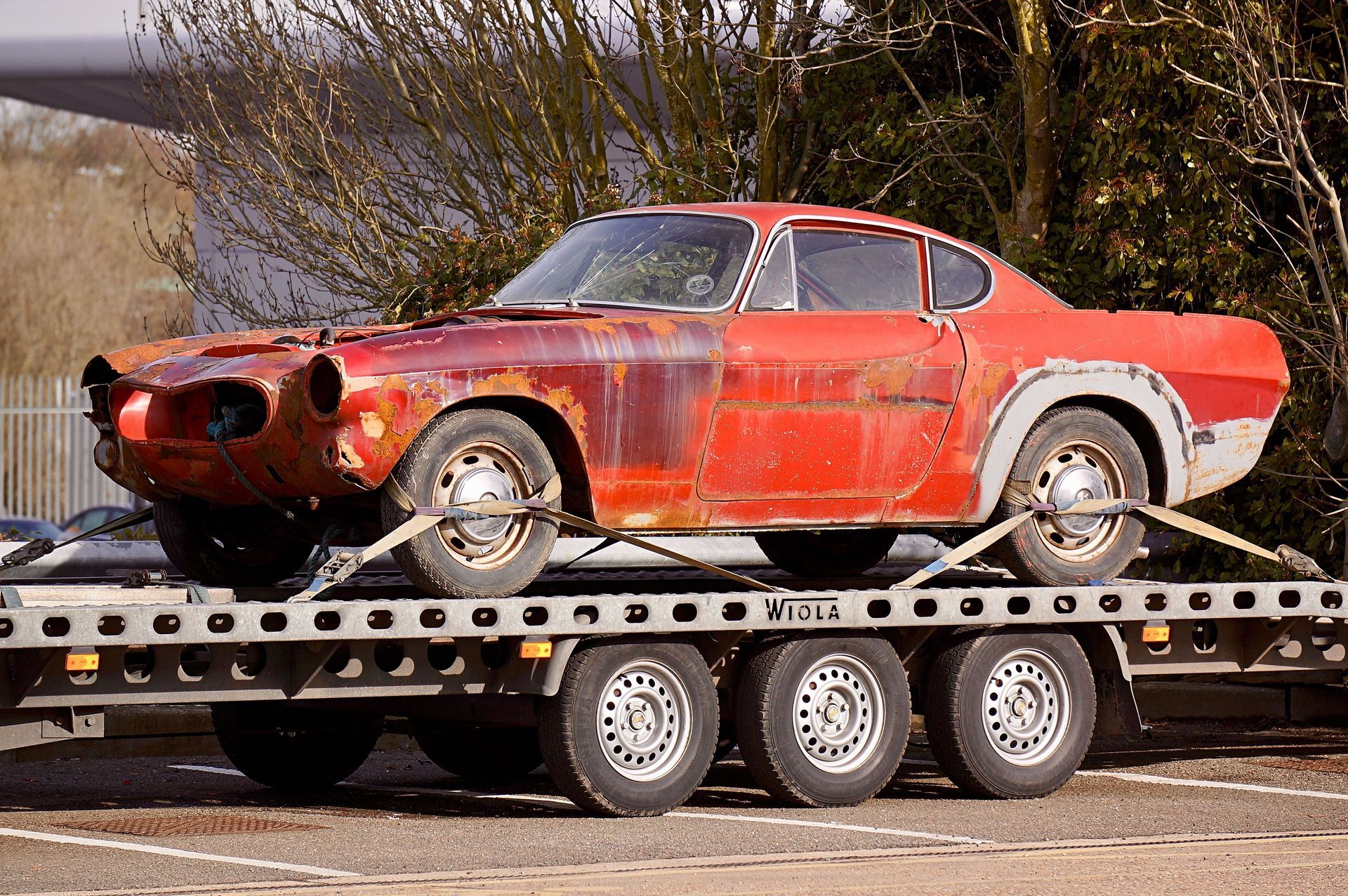
Take a common situation: a hotshot operator out of Bowie has run flatbed loads inside Texas for two years on his own MC authority when a broker offers him a standing lane hauling drilling equipment from the Panhandle up into western Oklahoma, twice a week, good money, steady freight. He takes the lane the same week the offer comes in and doesn't think to call his agent until a trailer axle fails outside Woodward and he realizes he has no idea whether his policy even follows the truck across the state line.
A Texas-based hotshot policy doesn't automatically extend full coverage into Oklahoma just because the truck crosses the Red River. The federal
26,001-pound CDL line is identical in both states, but MC authority, cargo limits, and bobtail or non-trucking liability language must be confirmed for Oklahoma operation, not assumed to travel with the truck.
That distinction trips up operators precisely because the weight math never changes. It's easy to assume that if the federal rule is the same on both sides of the border, the insurance is too. The rule is the same. The policy's territory is a separate question entirely.
The 26,001-pound line doesn't change; the paperwork does
A commercial driver's license becomes mandatory once the gross combination weight rating hits 26,001 pounds and the towed unit is rated over 10,000 pounds, and that federal threshold applies identically whether the rig is running Decatur to Fort Worth or Amarillo to Woodward. Nothing about crossing into Oklahoma moves that number. What does move is which authority and which filings a load actually needs once it originates or terminates in a second state, and that is where a Texas-only mindset gets an operator into trouble even though the weight math never changed.
Adding Oklahoma lanes is often the moment an operator realizes the FMCSA authority on file, the DOT number, the MC number, was scoped around Texas-only assumptions that were never written down anywhere, just understood. Nobody questions it until a load actually crosses the line. It's also worth pulling your own CSA/SMS score before you add a new state, since a carrier reviewing an Oklahoma-lane request will look at the same safety record either way, and a clean file makes the territory conversation faster.
Interstate authority versus an Oklahoma-only load
Hauling freight that originates in Texas and delivers in Oklahoma, or the reverse, is interstate commerce, and federal MC authority governs it the same way it governs any interstate run. A load that starts and ends entirely inside Oklahoma is a different animal: intrastate operation inside Oklahoma can carry its own state-specific authority and filing requirements separate from the interstate MC number an operator already holds. An operator who only ever ran interstate lanes between Texas and Oklahoma has never had to think about that distinction, and it's exactly the kind of gap that surfaces the first time a dispatcher offers a purely intrastate Oklahoma run.
The pattern we see in this kind of file is a non-trucking liability endorsement written years earlier around bobtail runs inside a defined Texas territory, language nobody ever revisited. Once Oklahoma lanes become a regular part of the business, that territory language has to be amended before it matches what the truck is actually doing, not after a bobtail mile in Oklahoma turns into a claim.
Cargo limits don't shift by state, but the covered territory has to include Oklahoma
Motor truck cargo minimums are set by the commodity and the contract, not by which state the freight happens to cross, so a cargo limit that satisfies a Texas shipper generally satisfies the same commodity moved into Oklahoma. The question that actually changes is whether the policy's stated operating radius or covered territory includes Oklahoma at all. It's a different question than
how radius of operation is rated, which is a premium factor; this is about whether the territory reaches Oklahoma at all. A policy quoted and bound around Texas-only operation can carry a territory definition that simply doesn't reach across the border, regardless of what the cargo limit says on the declarations page.
Operating radius. Confirm the policy's stated radius or territory explicitly includes the Oklahoma lanes you're running, not just the mileage band you were quoted on originally.
Bobtail and non-trucking liability. Read the territory language on both endorsements before you add Oklahoma runs; a Texas-scoped definition can leave a bobtail mile in Oklahoma outside the endorsement entirely.
New authority timing. If Oklahoma intrastate work is part of the plan, confirm that authority is filed and active before the first purely intrastate load, not scrambled together after a broker asks for proof.
Why this is a coverage-territory question, not a rate question
It's tempting to think of adding a state the way you'd think about a premium factor: something that nudges the cost up or down depending on how far the truck runs. Territory is different. A rating factor changes what you pay for coverage you already have. A territory gap can mean the coverage you assumed you had, including new-authority pricing built around a Texas-only radius, was never written to reach the place the loss happened. That's a far more expensive mistake to discover after a claim than before one.
Confirming Oklahoma is inside the policy's stated territory is a single phone call, and it's the same call whether you're adding one standing lane or building a business that regularly crosses the Red River.
Structuring the policy for both states from the start
TAP Insurance Agency is licensed in both Texas and Oklahoma, which means a hotshot policy can be written from day one to cover cross-border operation instead of bolted onto a Texas-only policy after the fact. That matters most for an operator who already knows Oklahoma freight is part of the plan, because writing the territory correctly at binding is simpler and cheaper than amending it mid-term once a lane is already running.
If Oklahoma lanes are already part of your week, or about to be, it's worth a conversation with
TAP Insurance Agency's trucking team before the next load crosses the line, not after a breakdown or a claim forces the question the way it did outside Woodward.
Call
(800) 666-2254 — or text
QUOTE to
(817) 646-6700 · tapinsuretx.com
Educational only; coverages and availability vary by carrier. TAP Insurance Agency, PLLC — Rhome, TX, licensed in Texas and Oklahoma.