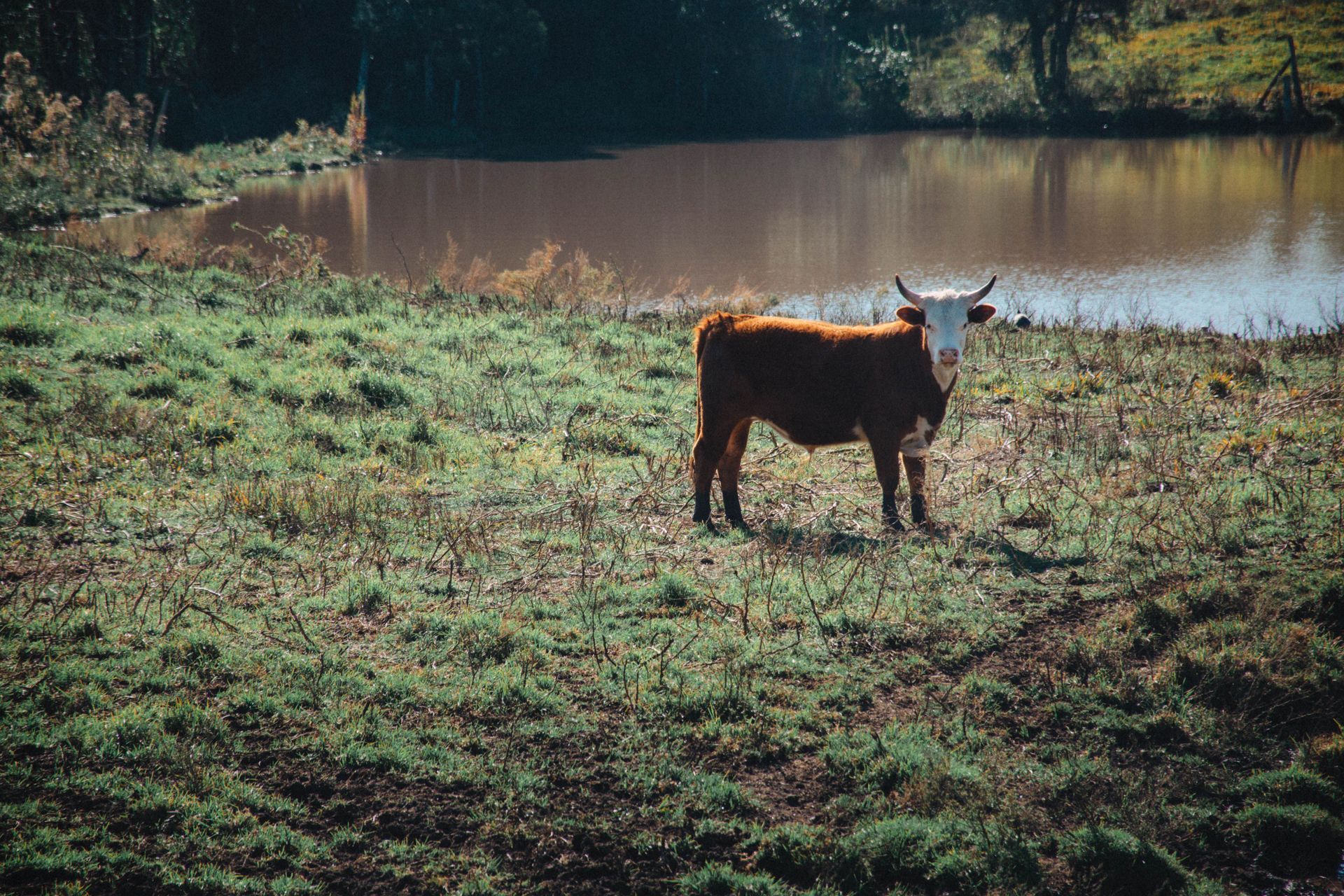
Picture twelve acres outside Alvord with a stock tank behind the house. The owners dug it years ago for the cattle, and it turned into the best part of the place. The kids fish off the bank, the neighbors ask about bass, and on Sunday afternoons three or four families drift over with lawn chairs. It is exactly what a rural property is supposed to feel like, and nobody there has ever asked what the homeowners policy says about it.
Here is the direct answer. If a visitor is hurt at a pond on the property where you live, the personal liability section of a homeowners policy generally responds, paying defense costs and damages you are legally responsible for, up to the limit. That general rule has edges. A fee for fishing, a dock or diving structure, a large acreage, or a farming operation can each change how a carrier looks at it.
Why water is a different kind of hazard
Courts and insurers treat standing water differently from a fence or a shed because the worst outcome is so much worse. A pond does not have to be deep to be dangerous to a small child, and a steep, muddy bank can be hard to climb out of even for an adult. The law generally expects a landowner to use more care where children are likely to wander, and water is a classic example of a feature that draws them.
That does not make a pond an uninsurable risk. It means the policy language and your own precautions matter more here than on most parts of a property.
Four questions to ask about your pond
Who is on the property? Family and invited guests are the ordinary case, and liability coverage is built for it. If you let outside groups use the water, such as hunting or fishing guests, look at how liability works for those arrangements, which we explained in our post on
hunting lease liability in Texas.
Do you charge anything? A fishing fee, a paid day pass, or a kids' event with an entry charge can turn a personal use into a business activity. Business activity is commonly excluded from a homeowners policy, and it is the fastest way to find out mid-claim that you were not covered.
What is built on or around it? A dock, a pier, a diving board, a swing rope, or a paddle boat raises the risk, and some carriers ask for extra protections or exclude them. A structure that sits on the property may fall under other structures coverage, which is a separate part of the policy.
How much land is it, and is it a working operation? Some homeowners forms limit the acreage they will cover, and a working ranch may need a farm and ranch policy instead. If you also keep livestock, our guide to
horse property coverage shows how those exposures are handled.
What the policy typically does not cover
Liability is about people getting hurt. Damage to the pond itself is a different matter. Erosion, a washed-out bank, a breached dam, or a fish kill after a hot summer are generally not what a standard homeowners policy pays for, and flood is excluded from homeowners coverage as a peril in its own right. If a spillway failure sent water onto a neighbor's land, the liability question could become significant, and it is worth asking your agent about before that happens.
That is not a reason to panic. It is a reason to know where the policy stops, so you can decide what to fix with maintenance and what to cover with insurance.
When a neighbor's child wanders over
The scenario that keeps landowners up at night is not the invited fishing guest, it is the child from down the road who follows a dog through a gap in the fence. The law generally holds a landowner to a higher standard where children are likely to be attracted to a hazard, and a pond is the standard example. Being neighborly is not a defense if the gate is always open and the bank is steep.
Talk to the families nearby. A friendly word about staying off the water unless invited, and a lock or latch on the gate closest to the tank, does more than any endorsement will.
Buying or inheriting land with a pond
If you are shopping for acreage, ask about the pond before you close. How old is the dam, has it ever overflowed, who maintains the spillway, and is there a dock or structure that came with the property? Some carriers ask about ponds on the application, and answering honestly protects you if a claim ever comes up.
Ask your agent to review the property before you bind coverage, especially if the acreage is large or the tank is big enough to be more than a stock pond. A short conversation up front is better than a surprise at claim time.
Practical steps that lower the risk
Fence the water where small children could reach it, and use a self-latching gate. Post a plain sign about no swimming or no unsupervised children if that is your rule. Keep a life ring or a long pole where it can be reached, and keep the banks mowed enough that a visitor can see the edge. If you have a dock, inspect the boards and the ladder every season.
Before a neighborhood gathering at the water, remind adults that supervising kids is their job. It sounds simple, and it prevents most of the accidents that lead to claims.
Check your limit while you are at it
Liability limits on a homeowners policy are set at the time you buy it, and many rural landowners never revisit them. If you have a pond, guests, and a family with something to protect, it is worth asking whether your limit still fits. A separate umbrella policy adds another layer of liability protection above the limits on your home and auto policies.
If you would like someone to read through your policy with the land in mind, talk with
a Wise County insurance agent who works with acreage and rural homes every week, and can compare more than one carrier for you.
Call
(800) 666-2254 — or text
QUOTE to
(817) 646-6700 · tapinsuretx.com
Educational only; coverages and availability vary by carrier. TAP Insurance Agency, PLLC — Rhome, TX, licensed in Texas and Oklahoma.