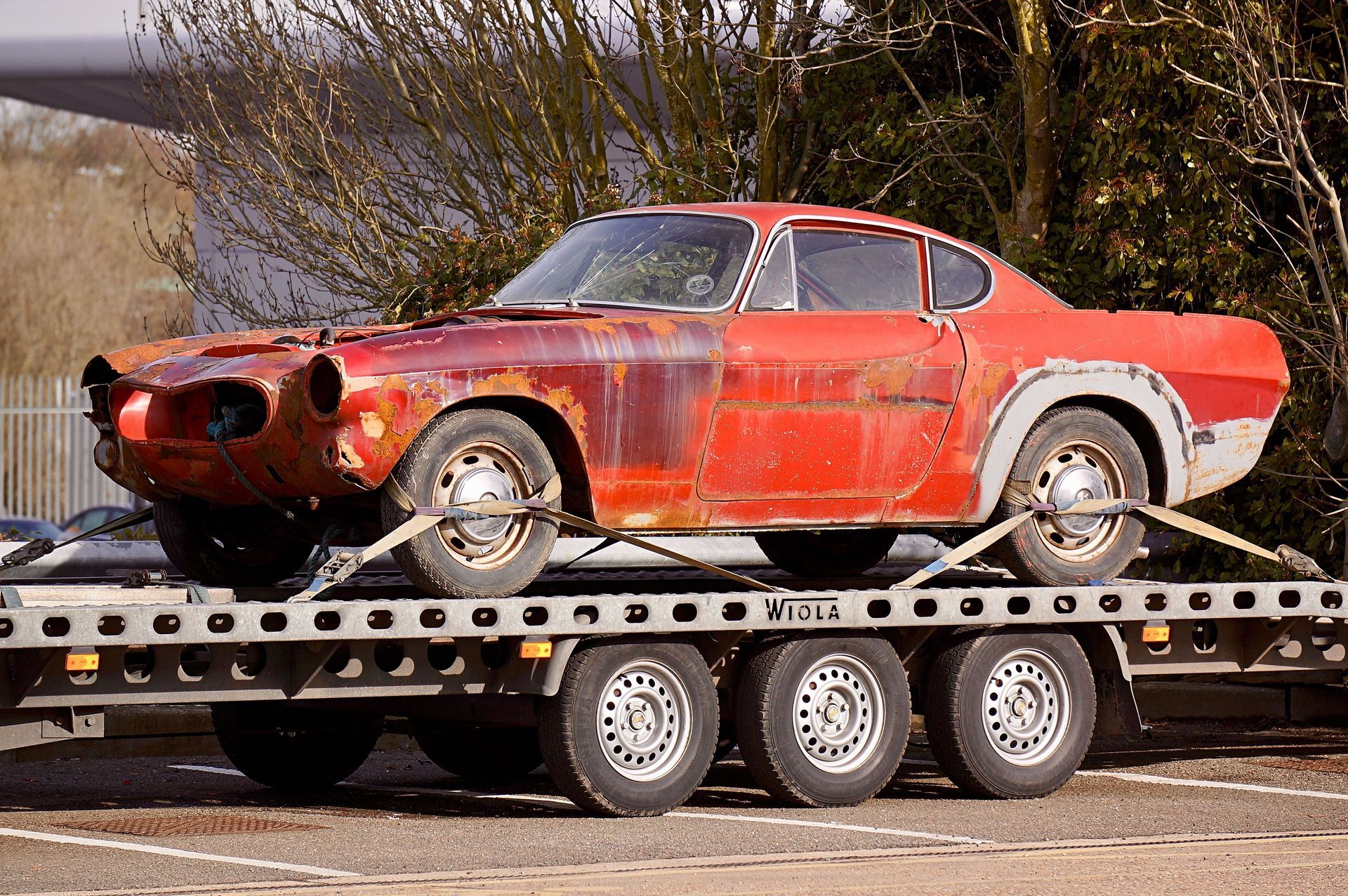
Tessa rear-ended a pickup on Highway 114 two autumns ago, right where the frontage road narrows near the overpass. Nobody was hurt, the claim was paid out without much drama, and she's been a model driver ever since. Even so, her renewal keeps carrying that accident, and she wants to know exactly when it stops counting against her.
In Texas, a ticket typically raises your rate for about three years, and an at-fault accident usually surcharges your policy for three to five years, though the exact window varies by carrier. After that stretch, the incident generally stops counting against your premium.
It's one of the most common questions people ask about car insurance, and one of the least explained anywhere on the actual bill. There's a real timeline behind it, carriers just don't hand you a copy of it at the counter, and it decides more of the renewal than most drivers realize.
The two records that matter
Two separate records drive what you pay, and they aren't the same thing, even though it's easy to lump them together. The first is your motor vehicle record, the state's running list of tickets, violations, and license actions tied to your name. The second is your claims history, which most carriers check through CLUE, a shared industry database of claims history that compiles what's been reported across insurers, not just the one you're currently with.
Motor vehicle record (MVR). The state's running list of tickets, violations, and license actions tied to your name.
Claims history (CLUE). A shared industry database of reported claims that catches an accident even when no ticket was ever written.
A quote can look at either record and catch something the other one misses entirely. A speeding ticket with no accident attached shows up on your MVR but never touches CLUE. A claim with no ticket involved, like Tessa's fender bender, works the opposite way, since it lives in her claims history whether or not a citation was ever written.
It's also worth remembering that roughly one in seven Texas drivers carries no insurance at all. Your own driving record resets as the years go by, but that particular risk on the road around you doesn't, which is exactly why
uninsured motorist coverage is worth keeping in place no matter how clean your file looks at renewal.
The three-to-five-year window
As a general rule, minor tickets tend to influence pricing for around three years from the date of the violation. At-fault accidents commonly run three to five years, though the exact window shifts from one carrier to the next, since nobody prices it exactly the same way, which is part of why shopping around later can turn up a noticeably different answer than simply renewing with the same carrier.
The window usually isn't a hard cutoff where a surcharge disappears overnight. Pricing tends to soften gradually as an incident ages, the same way a bruise fades rather than vanishes on a single day, and a larger claim can take longer to fully work its way off a file than a smaller one. For Tessa, that means her Highway 114 accident is probably still inside the window most carriers are weighing, but she's closer to the far end of it than the near end.
What falls off faster
Not every mark on your record carries the same weight or the same shelf life. A single moving violation with no accident attached tends to age out fastest, often close to that three-year mark, while a string of tickets in a short span can reset how a carrier views the whole file, not just the most recent one. A not-at-fault accident, one where the other driver was clearly responsible, is usually treated more gently than an at-fault one, even though both technically show up as a claim on your history.
Claim-free and safe-driver discounts work like a quieter version of the same clock running in the background. As the years pass without a new incident, those discounts tend to come back into play on top of the surcharge simply falling off, which amounts to two resets happening at slightly different speeds, both working in your favor over time.
When an SR-22 enters the picture
Major convictions are a different story entirely. A DWI or a similarly serious violation tends to follow a driver longer than anything else on this list, and it often triggers the need for an
SR-22 filing, a state-required form your insurer files with Texas to prove you're carrying the minimum required coverage. Texas requires that filing be maintained for two years, and letting it lapse at any point during that window can reset the clock back to the beginning.
An SR-22 isn't a type of insurance policy on its own. It's paperwork layered on top of a policy you already carry, which is why it can usually be added without switching carriers or restructuring your coverage. The filing is what carries the weight, and the policy underneath it can often stay the same, which surprises a lot of drivers the first time they need one.
What you can do while the clock runs
There are a few things worth doing in the meantime, rather than just waiting it out and hoping the calendar does all the work. Keep your coverage continuous, since a lapse in coverage can end up costing more at your next renewal than the original ticket or accident did in the first place. Ask whether a state-approved defensive driving course is available to you, because in many cases, and where the court allows it, completing one can keep a ticket off your record entirely rather than just softening its effect.
Re-shopping around the three-year mark is worth doing as well, since carriers weigh the same driving history differently from one another. A record that reads as expensive to one carrier may look very different to the next, simply because of how each one builds its own pricing model, and it costs nothing to ask twice, especially once you're past the middle of the window.
The reset is real
Mark the anniversary of whatever put the mark on your record, whether that's a ticket, an at-fault accident, or the day an SR-22 filing became active, and revisit your coverage around that point rather than letting it renew on autopilot. The record behind the wheel doesn't stay the same forever, even on the days it feels like it will.
Nothing here promises a lower bill. Rates vary by carrier and by everything else in your file, not just this one item. But if it's been a while since your last
auto insurance quote, Tessa's situation is a good reminder that the question is worth asking again, on its own schedule rather than waiting for a renewal notice to force it.
Call
(800) 666-2254 — or text
QUOTE to
(817) 646-6700 · tapinsuretx.com
Educational only; coverages and availability vary by carrier. TAP Insurance Agency, PLLC — Rhome, TX, licensed in Texas and Oklahoma.