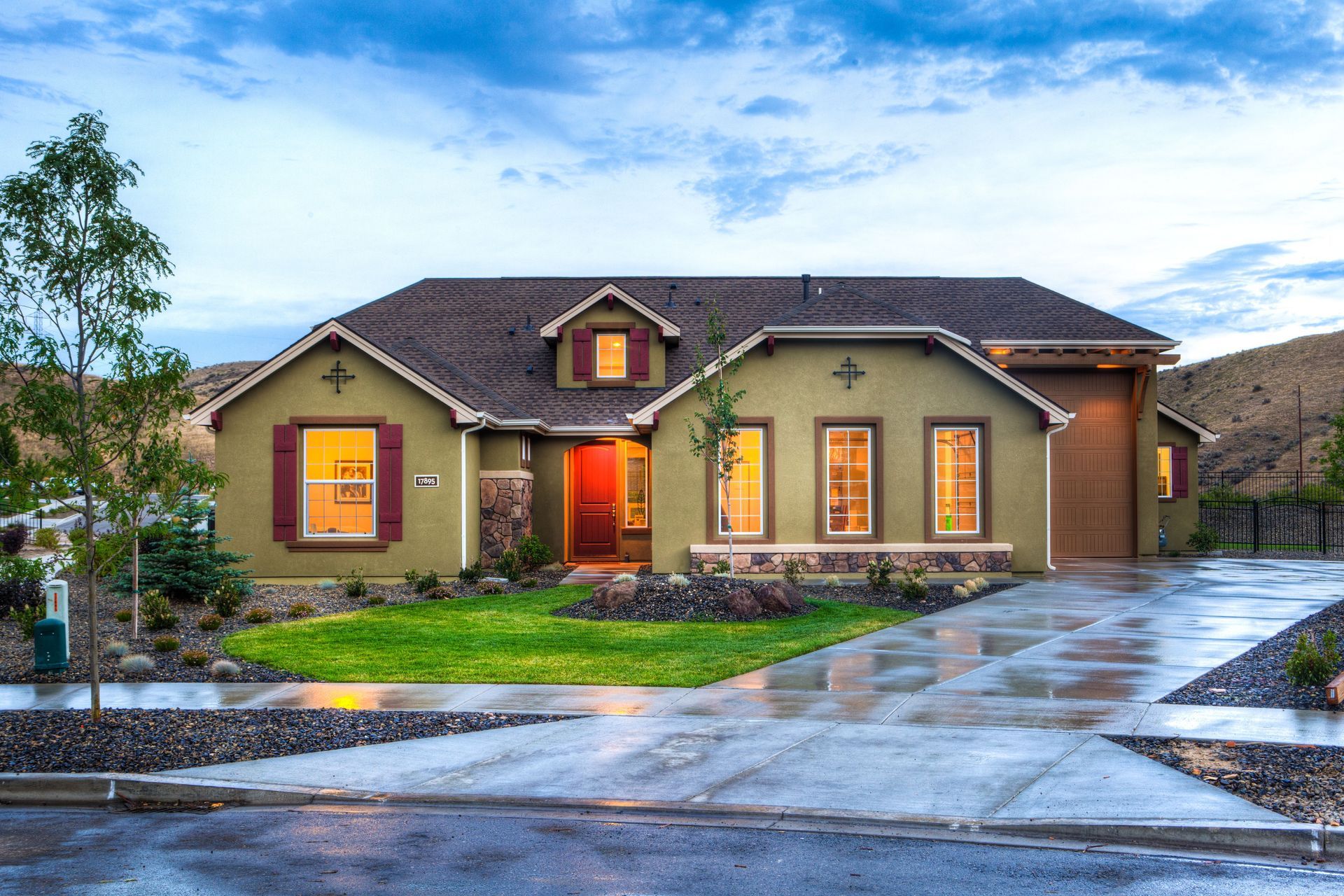
Not long ago, a North Texas landlord asked us to look over the insurance on a rental house she owns down in the Houston area. When she first bought the place, she insured it the same way she'd always insured her own home — a standard homeowners policy, same carrier she'd used for years. Nobody flagged a problem. The premium came due, she paid it, and she moved on. It wasn't until she sat down to compare quotes this year that an agent noticed the policy was written for an owner-occupied home, even though a tenant had been living there the whole time. If a pipe had burst or a storm had torn off part of the roof, there was a real chance the carrier could have denied the claim outright — not because anything was wrong with the house, but because the paperwork didn't match reality.
She isn't unusual. She's the reason this post exists.
What the Wall Street Journal actually found
Earlier this year, The Wall Street Journal published an analysis of state insurance filings covering the five largest home insurers in the country. The finding: those insurers collectively closed more than 44% of claims last year without paying anything at all, up from roughly 36% a decade earlier. That's not a rounding error. That's closer to a coin flip.
To be fair to the data, "closed without payment" covers a lot of ground. Some of those claims fell under the deductible. Some involved damage that simply wasn't a covered peril. Some were contested and the homeowner walked away. The Journal's analysis didn't isolate paperwork accuracy as a single cause, and we're not going to pretend it did.
But we're independent agents who sit across from Texas homeowners every week, and we see one particular flavor of unpaid claim often enough that it deserves its own conversation: the policy on file doesn't match the property, the driver, or the situation that actually exists on the ground. That gap is almost always avoidable, and it's almost always caught too late.
Why claims get closed without payment in the first place
Most homeowners assume a denied claim means the insurance company found a reason to say no. Sometimes that's exactly it. More often, the real story is quieter: the policy was accurate on the day it was written, and something about the property or the household changed without anyone updating the file.
A new roof, or an old one nobody flagged.
Roof age drives both eligibility and how a claim pays out. A policy written years ago on outdated roof information can pay out at a fraction of what the homeowner expects, or not qualify for full replacement cost at all.
A driver who moved, or a license that changed. Auto and homeowners policies both ask who lives in the household and where they're licensed. A college student living out of state, a driver with a recently issued out-of-state license, or a vehicle that's actually garaged somewhere other than the address on file can all complicate a claim if nobody caught the change.
A property that's used differently than it was insured. This is our landlord's story. An owner-occupied homeowners policy and a landlord policy are genuinely different products, built for different risks, and a carrier that discovers the mismatch after a loss has every contractual right to deny.
The most common accuracy gaps we see in Texas
Texas adds its own wrinkles on top of the general pattern. Hail season alone means roof condition gets scrutinized constantly, and a homeowner who patched storm damage without documenting it can end up with a policy that doesn't reflect the roof's real age or condition.
Rental properties are a recurring theme, especially as more Texans buy a second or third property as an investment.
A homeowners form on a tenant-occupied house is one of the most common — and most expensive — mismatches we run into.
And outbuildings are their own category entirely. A barn, a shop, a foaling shed, a detached garage — Texas properties tend to have more of these than a typical suburban lot, and a generic "other structures" default value on a policy rarely reflects what's actually standing on the property.
Outbuildings and other structures: the default value problem
Most homeowners policies auto-populate an "other structures" value as a flat percentage of the main dwelling coverage, whether or not that number bears any relationship to what's actually on the property. A steel-frame equipment barn and a small storage shed get treated identically by that formula, right up until one of them burns down and the payout doesn't come close to covering the rebuild.
The fix isn't complicated. It just takes someone asking the question before the policy is written, not after a loss: what's actually out there, what's it built from, and what would it cost to replace?
How an independent agency builds accuracy into the process
This is the part of the job that doesn't feel exciting in the moment. Asking about roof age, outbuilding construction, who's driving which vehicle, and how a property is actually being used isn't a fun conversation. It can feel like homework. We hear that from clients regularly, and we get it.
We push through it anyway, because we've seen what happens on the other end when those details are wrong. And because we're independent, we're not locked into one carrier's application format or one company's tolerance for a messy file — we can shop the same accurate information across multiple carriers and let the coverage, not the paperwork, decide who gets the business.
That's the whole point of
working with an independent agency rather than a single captive company: more than one set of eyes on the same set of facts, and no loyalty to a carrier that would rather write a policy fast than write it right.
What you can do before your next renewal
You don't need to wait for a claim to find out if your policy matches reality. A few minutes before your next renewal can catch most of what matters.
Pull your declarations page and actually read it. Check the roof year, the square footage, and any outbuildings listed. If something's missing or wrong, say so.
Tell your agent if a property's use has changed. Moved out and started renting it? Added a tenant? That's a landlord policy conversation, not a footnote.
Update driver and household information every year. A new license, a college student's address, a car that's parked somewhere different than it used to be — all of it matters more than it seems like it should.
None of this guarantees a claim gets paid. Nothing can promise that. But a policy that actually reflects the property and the people on it gives a claim its best possible chance, and that's worth the extra five minutes of questions up front.
Call (800) 666-2254 — or text
QUOTE to (817) 646-6700 · tapinsuretx.com
Educational only; coverages and availability vary by carrier. TAP Insurance Agency, PLLC — Rhome, TX, licensed in Texas and Oklahoma.