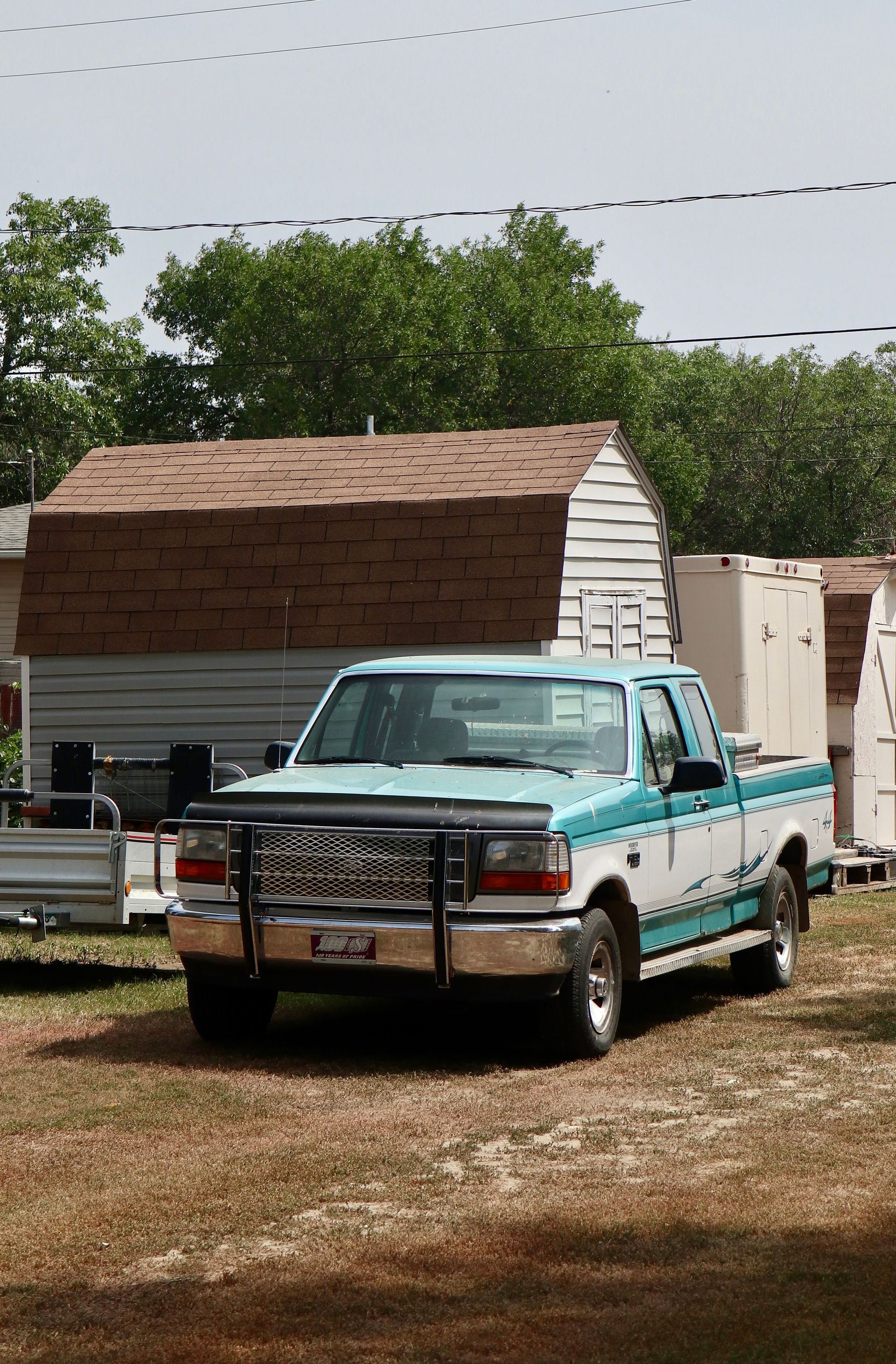
Picture a lawn and landscape company in Rhome with three trucks and a trailer. The owner buys a used pickup in October to keep up with fall cleanup work, drives it to a job site, and someone backs into it in a parking lot. He calls his agent expecting a routine claim. The adjuster opens the policy, looks at one column on the declarations page, and asks a question he cannot answer: what symbol is listed next to physical damage coverage?
Here is the short version. Covered auto symbols are numbers on a business auto policy that tell you which vehicles each coverage applies to. They can be different for liability, physical damage and other coverages on the same policy, and a vehicle that does not fit the symbol may not be covered, no matter how much you pay in premium.
Where to find the symbols
Look at the declarations page of a standard business auto policy, in the section that lists coverages and covered autos. Each coverage, such as liability, medical payments, uninsured motorists, and comprehensive and collision, has a number beside it. That number is the symbol.
Most people never look. That is fine until a claim, when the symbol is the first thing the carrier checks. Even a routine question, such as whether anything applies when an employee runs a work errand in a personal car, comes back to the symbols, as we explained in our post on
an employee's own car on a work errand. Trucking operations often use a separate motor carrier coverage form with its own numbering, so if you haul freight for hire, your symbols may look different from those described here.
The symbols you will see most
Symbol 1, any auto. The broadest choice. Coverage applies to any vehicle, whether you own it, rent it, or borrow it. It is typically used for liability and is not always available for every coverage.
Symbol 2, owned autos only. Applies to vehicles the business owns, including ones it buys later. Rented and employee-owned vehicles fall outside it.
Symbol 7, specifically described autos. Applies only to the vehicles listed on the policy by year, make and VIN. It is common for physical damage, since that coverage is priced by vehicle value. A new vehicle is generally covered automatically only for a short window, so you have to report it.
Symbol 8, hired autos only. Applies to vehicles the business leases, hires, rents or borrows, not including ones owned by employees. A rented cargo van on a Saturday job would fall here.
Symbol 9, nonowned autos only. Applies to vehicles the business does not own, lease, hire, rent or borrow, which usually means an employee's personal car used on business. This is the symbol behind the employee errand situation.
How the gap happens
The most common gap is a vehicle that was bought and never reported. If liability is on Symbol 1 but physical damage is on Symbol 7, the new truck may be covered for liability the day you buy it, yet have no comprehensive or collision until it is added to the policy. The claim in our landscaping example turns on exactly that difference.
Another is the vehicle that fits no symbol. Suppose a business has its liability on Symbol 7 and a manager drives a personal car to a bank. Without hired and non-owned coverage, there may be nothing on the policy that applies.
Symbols and growth
The policy that worked when you had one truck is rarely the right policy when you have five. Every time you buy, sell, lease, or swap a vehicle, the schedule and the symbols should be checked. We saw the same pattern in trucking when
adding a second truck and a first driver changes what the policy needs to say.
Replacing a vehicle is the case people forget. A truck you sold and its replacement are two different lines on the schedule, and the policy only knows about the change if someone tells it.
Reading a real declarations page
Imagine a policy that lists liability under Symbol 1, medical payments under Symbol 7, uninsured motorists under Symbol 7, and comprehensive and collision under Symbol 7 with each truck listed by VIN. Reading it, you would learn three things. Any vehicle is covered for liability. Only the listed trucks are covered for their own damage. And a truck missing from the list has liability coverage but no protection for itself.
Trailers are a common surprise. A trailer may need to be listed separately, and one that is not scheduled may have no physical damage coverage even when the truck pulling it does.
Adding, replacing and selling vehicles
Every change to your fleet should trigger a call. Buying a vehicle means reporting it and asking whether it is covered automatically, and for how long. Selling one means removing it, so you are not paying for a truck you no longer own. Replacing one means reporting the swap and confirming the replacement is on the schedule.
Most policies give a short window for newly acquired vehicles, but the rules differ by symbol and by form, so read the language or ask your agent to confirm it. The safest habit is a same-day call whenever a title changes hands.
A five-minute check you can run today
Pull your declarations page and write down the symbol beside each coverage. Compare it with the list of vehicles on your schedule and the vehicles actually parked at your shop. Ask what happens if you buy a vehicle mid-term, how long you have to report it, and whether you have hired and non-owned coverage for rentals and employee cars.
Ask whether the symbols on your policy match how your business really operates. If you buy and sell equipment often, or if employees drive their own vehicles, you may need a different structure than the one you bought years ago.
We work with independent carriers, so we can compare how each handles newly acquired vehicles and reporting rules. If you would like a second set of eyes on your policy, start with
commercial vehicle insurance and we will read the declarations page with you.
Call
(800) 666-2254 — or text
QUOTE to
(817) 646-6700 · tapinsuretx.com
Educational only; coverages and availability vary by carrier. TAP Insurance Agency, PLLC — Rhome, TX, licensed in Texas and Oklahoma.