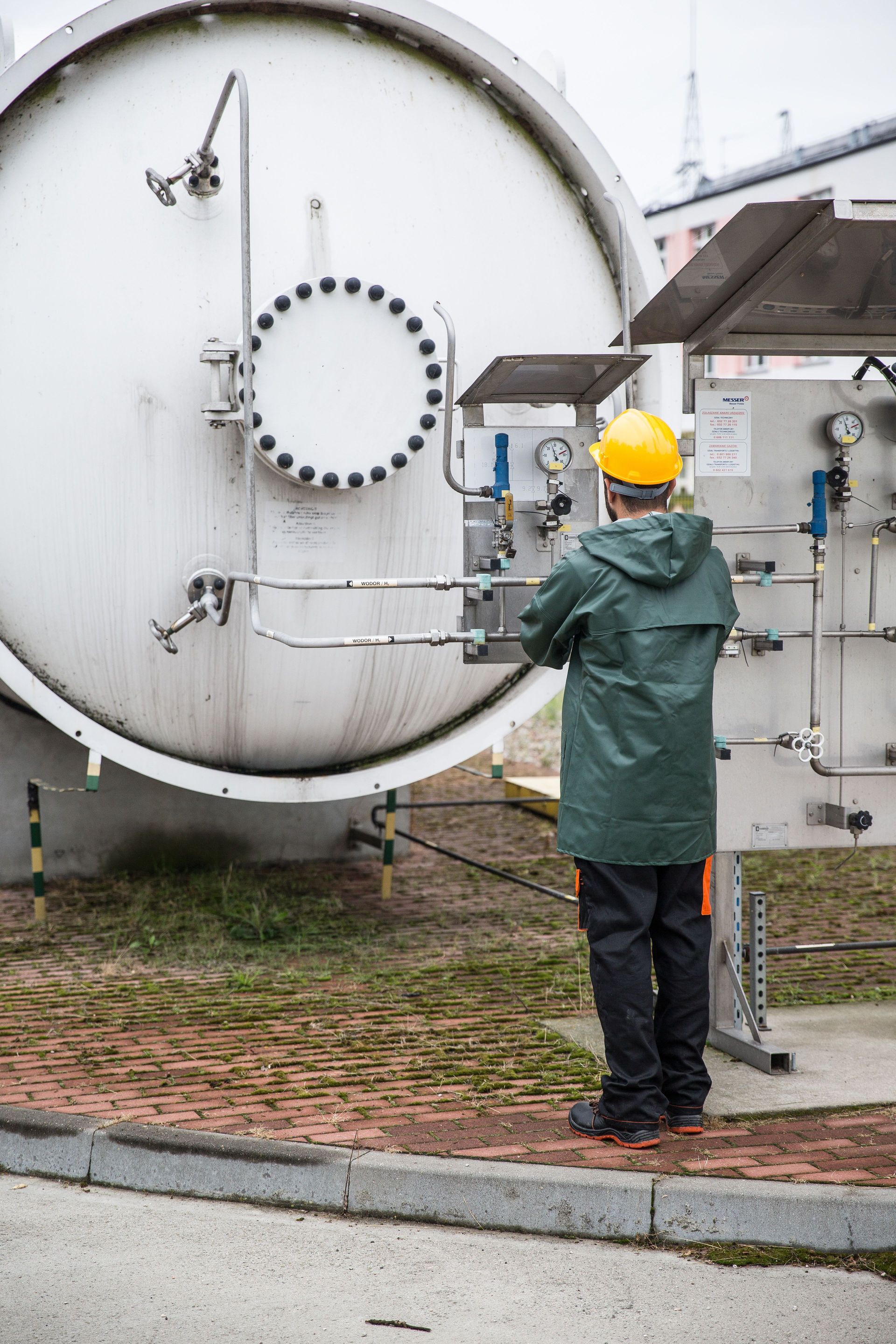
Picture a small hauling outfit in Wise County that keeps a bulk diesel tank on a gravel pad behind the shop. A fitting weeps for weeks without anyone noticing, and the first sign is a rainbow sheen in the drainage ditch that runs toward the neighbor's pasture. Testing, soil removal and a worried neighbor all land on the owner before anyone has asked which policy responds.
The short answer is that a standard general liability policy usually excludes pollution, so cleanup and most outside claims from a leaking fuel tank often fall outside it. Storage tank pollution liability insurance in Texas, written as a pollution legal liability or storage tank policy, is the coverage built for exactly that leak. Terms vary by carrier, and some tanks also come with state financial-responsibility rules.
Why the general liability policy usually says no
General liability pays for bodily injury and property damage you cause to other people. Nearly every form carries a pollution exclusion, a clause that removes coverage for the discharge, seepage or release of pollutants, and fuel is a pollutant. Some forms keep narrow exceptions, such as fuel that escapes from the tank of your own vehicle, but a bulk tank sitting on the ground is a different animal.
Your commercial auto policy has the same kind of exclusion, again with exceptions aimed at the fuel inside a vehicle. That leaves three things sitting in the gap: cleanup on your own land, claims from neighbors or downstream owners whose property was fouled, and the legal defense that comes with those claims. If you haul under contract, read the
insurance requirements written into oilfield contracts closely, because some customers ask for pollution coverage by name and a certificate showing only general liability may not satisfy the paragraph.
What a storage tank or pollution policy generally responds to
Pollution legal liability and storage tank policies are built around a release from the tank. Depending on the form, they can respond to cleanup costs, which is the testing, excavation and disposal work that follows a leak, plus claims for third-party property damage or bodily injury, emergency response and the cost of defending a suit. Whether your own site is included, and whether the policy treats aboveground and underground tanks the same way, differs from form to form.
Pay attention to two phrases. Many pollution policies are claims-made, meaning the claim has to be made and reported while the policy is in force, not just caused during it. A retroactive date, the earliest date a release can have begun and still be covered, sits on top of that. A leak that started before the retroactive date, or a condition you already knew about when you applied, is generally not covered.
That is why timing matters more here than on most policies. A policy bought after the sheen shows up in the ditch will not pick up that leak, and letting coverage lapse or switching carriers without carrying the retroactive date forward can quietly shrink what the new policy responds to.
Which tanks come with rules of their own
Tank regulation depends on what the tank holds, whether it sits above or below ground, how large it is and how it is used. Underground petroleum tanks are regulated by the Texas Commission on Environmental Quality (TCEQ) in Texas and by the Oklahoma Corporation Commission in Oklahoma, and owners of regulated tanks generally have to demonstrate financial responsibility, which a pollution policy written to meet the rule can help satisfy. Aboveground tanks can bring registration or spill-prevention requirements as capacity grows, and some farm and residential uses are treated differently.
We are not the regulator and this is not legal advice. Before you decide a tank is exempt, confirm its status with TCEQ or the Oklahoma Corporation Commission, and ask whoever installed or services the tank what paperwork is on file.
Who should be asking this question
Contractors and oilfield service shops. Contractors who have read about
what a general liability policy leaves out for working contractors know the list is long, and fuel on site belongs on it. A shop with a bulk tank or a mobile fuel trailer has the same exposure on a different lot.
Trucking yards. A yard fuel tank saves trips to the truck stop, and it also puts a tank near drains, gravel and a property line. A fleet that fuels its own trucks should know where fuel is excluded, and whether the commercial auto form treats the tank at all.
Farms and ranches. Diesel for tractors and hay equipment is often stored in a tank near a barn, creek or stock pond. A farm policy may handle pollution differently than a commercial one, so the exclusion wording matters.
Fuel-island businesses. If you sell fuel to others, your exposure runs past your own property, and the policy conversation is a different and more specialized one.
What an underwriter will ask about the tank
Pollution carriers underwrite the tank itself. Expect questions about its age and material, such as steel or fiberglass and single or double wall, whether it has secondary containment like a berm or a lined pad, overfill protection, leak detection and how far it sits from water, drains and neighbors. They will ask who services it and when it was last inspected.
The records matter as much as the hardware. Fill logs, inventory reconciliation sheets that compare what you bought with what you pumped, and inspection reports are how a slow leak gets caught early, and they are how an owner shows the tank is managed. A tank with good paperwork is easier to place than one nobody has looked at in years, though availability and terms vary by carrier.
What to do this week
Start by finding the pollution exclusion in your general liability and commercial auto forms, and write down what your tank holds, how big it is and when it was installed. Photograph the tank, the containment and the surrounding ground while everything is normal. Begin keeping a simple fill and usage log if you do not already have one.
Then bring it to someone who writes this coverage every day. If you want to
talk through your yard or farm with a local agent, TAP Insurance Agency is an independent agency that shops multiple carriers, so we can see which markets will look at a tank like yours. Some tank accounts need specialty markets, and nothing is promised until a carrier agrees to it, but a conversation costs you nothing.
Call
(800) 666-2254 — or text
QUOTE to
(817) 646-6700 · tapinsuretx.com
Educational only; coverages and availability vary by carrier. TAP Insurance Agency, PLLC — Rhome, TX, licensed in Texas and Oklahoma.