You hitch up the boat, the utility trailer, or the travel trailer, and you head out of
Rhome on 287. Somewhere in the back of your mind is a comfortable assumption: my auto insurance covers whatever I'm pulling.
Half right. And the half that's wrong is expensive.
What your auto policy does cover
Liability extends to the trailer. This part works the way you'd hope. Under a standard Texas personal auto policy, your bodily injury and property damage liability generally follows a trailer being towed by a covered vehicle. If the trailer swings into another car, or comes unhitched and hits somebody, your auto liability responds.
That's real and it matters. It's also where the good news stops.
What it usually doesn't cover
Physical damage to the trailer itself. Your comprehensive and collision coverage attaches to the vehicle listed on your policy. The trailer is not that vehicle. If your trailer is stolen out of the driveway, dented by hail, jackknifed into a ditch, or burned up — your auto policy typically pays nothing for the trailer.
Many carriers include a small amount of automatic coverage for a small owned utility trailer, often in the neighborhood of $500 to $1,500. That covers a flatbed you bought for $900. It does not cover a $45,000 fifth wheel or a $30,000 bass boat.
Contents inside the trailer. Tools, generators, camping gear, ATVs, fishing equipment. Not the auto policy. Sometimes partially covered by homeowners off-premises personal property — usually with a sublimit and a deductible that makes small claims pointless, and often excluded outright for business tools.
Liability while the trailer is parked and detached. This is the gap almost nobody sees coming. Once the trailer is unhitched at the campsite, the deer lease, or the job site, it's no longer a trailer being towed by your covered auto. If it rolls into a neighbor's truck, or someone trips over the tongue and gets hurt, your auto liability may not respond at all.
The three trailers, three answers
Utility, cargo, and equipment trailers. Auto liability follows while towed. Physical damage needs to be scheduled — either added to your auto policy as an owned trailer with its own comp/collision, or written on an inland marine policy. If you use it for a business, the personal auto policy may exclude it entirely and you're in commercial territory. Say so up front; a denied claim on a business-use trailer is a bad way to learn this.
Boat trailers. Usually cheapest to insure as part of the boat policy — most watercraft carriers add trailer physical damage for very little. That also solves the detached-liability problem while it's parked at the lake house. Do not assume the boat policy includes the trailer; a lot of them don't unless you ask.
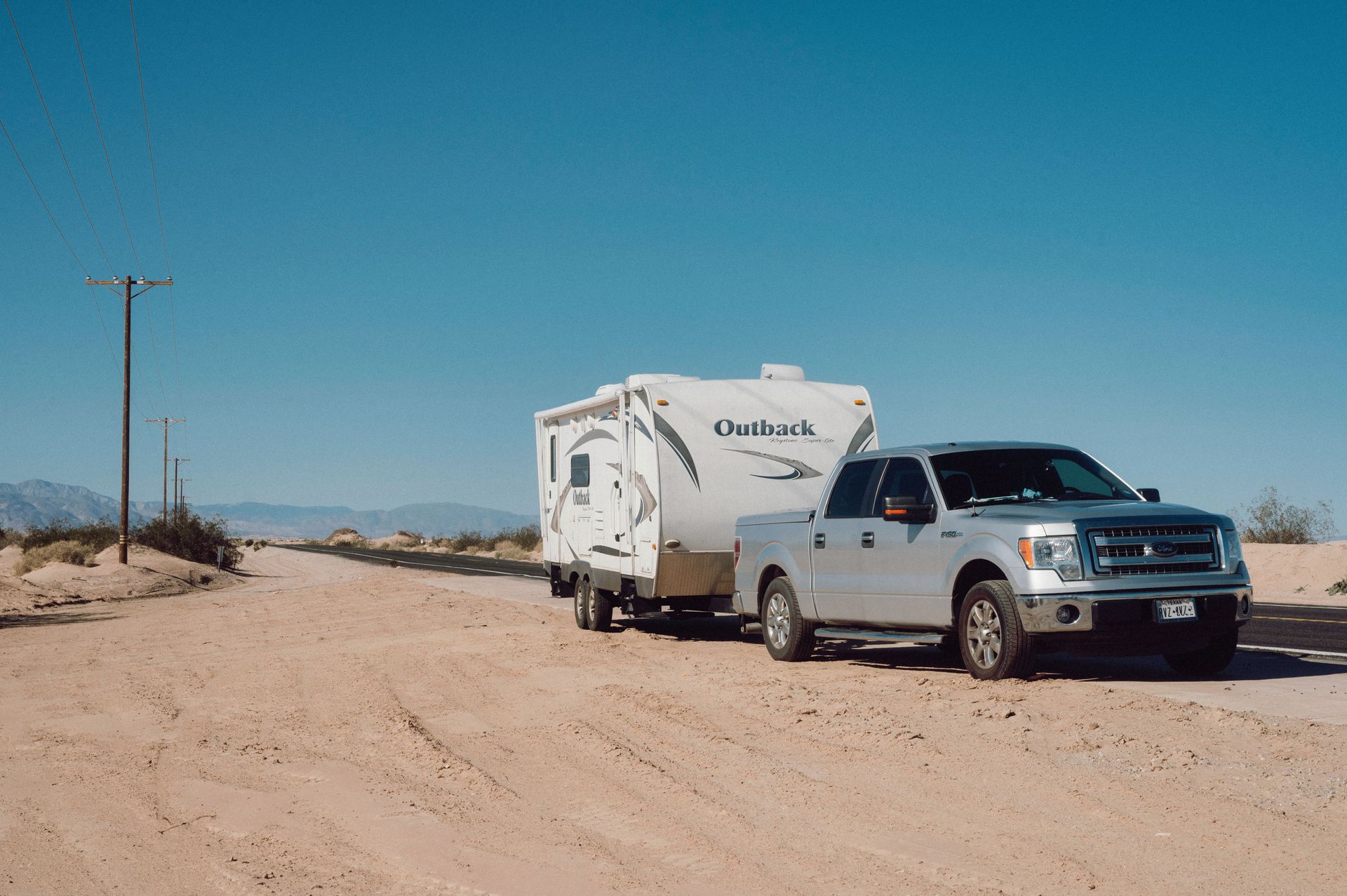
Travel trailers and fifth wheels. These want their own RV/travel trailer policy, and here's why: a towable RV isn't just property being hauled, it's a place people occupy. A dedicated policy adds coverage the auto policy never contemplated —
vacation liability (injuries to guests at your campsite), personal effects coverage inside the unit, emergency expense if the unit becomes uninhabitable on a trip, and full replacement cost on newer units instead of depreciated value. If yours is financed, the lender will require physical damage anyway.
Two Texas-specific items
Hail. North Texas leads the country in hail claims, and a trailer parked outside is a large, flat, unprotected target. Trailer roofs and boat gel coats take hail hard. Comprehensive coverage on the trailer is what pays for that — and if the trailer has no comprehensive, you eat it. Ask what your deductible is for wind and hail specifically; many property policies now use a percentage rather than a flat amount, and the difference matters.
Weight and licensing. Texas ties trailer registration and licensing requirements to gross weight, and heavier combinations can pull you into different rules. It's a registration question more than a coverage question, but underwriters ask about trailer weight and use, so have the number ready.
The five-minute audit
Before your next trip, answer these:
1. What's the trailer actually worth today, and could you write a check for that tomorrow?
2. Does anything on your policies list the trailer by VIN? If not, it probably isn't insured for damage.
3. What's inside it, and what's that worth?
4. Where does it sit when it's not hitched, and who's around it?
5. Do you ever use it for work — hauling materials, tools, equipment, or anything you get paid for? If yes, tell your agent before you tell a claims adjuster.
Most people miss questions 2 and 5. Question 5 is the one that produces denied claims.
Where TAP fits
We write auto, boat, RV, and
commercial auto out of the same office, so we can look at the truck, the trailer, and what's inside it as one problem instead of three quotes from three companies. Frequently the fix costs less than people expect — adding a scheduled trailer or moving trailer physical damage onto the boat or RV policy is often a small annual number.
If you're hauling something this summer that isn't listed anywhere on your policies, let's fix that before you're on the shoulder of 287.
Call (800) 666-2254 for a free quote — or text QUOTE to (817) 646-6700 ·
tapinsuretx.com