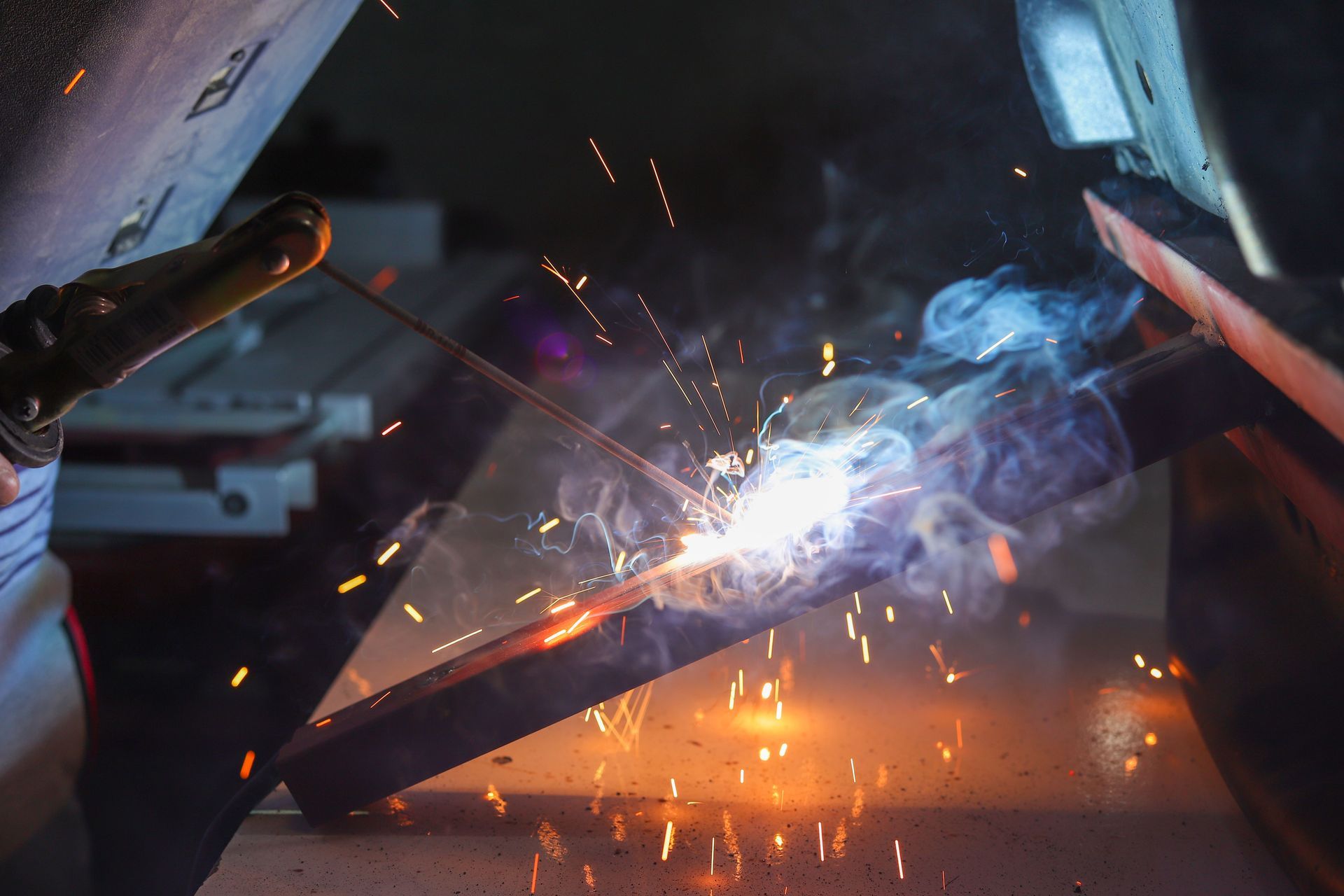
Picture a welder out of Springtown who runs a one-truck business: a flatbed with a welding machine bolted to the bed, a rack of gas bottles and a toolbox full of leads and grinders. He is hypothetical, but the kind of Tuesday he has is real. He fixes a gate for a rancher near Decatur in the morning and welds a bracket on a tank battery in the afternoon, and each of those jobs touches a different kind of risk.
A mobile welder needs four things working together: commercial auto on the truck, inland marine on the welder and equipment, general liability for the work, and whatever endorsements the contracts demand. Commercial auto is the policy for vehicles used in a business. Inland marine is coverage that follows equipment wherever it goes. General liability pays for certain injury and property damage you cause to other people, and an endorsement is an add-on that changes what a policy covers.
Why a personal auto policy is out the moment you charge for a weld
A personal auto policy is built for commuting and errands, and many of them exclude or restrict using the vehicle for business of this kind. Once you are hauling a welder to paying customers, the truck is in business use. That may leave a claim in dispute if the insurer decides the trip was work.
Work in the oilfield raises the bar further. An MSA, short for master service agreement, is the contract that sets the terms before any job begins, and
what an oilfield MSA demands often includes specific coverages and limits before you can even drive onto the lease road. It is far better to know that before the first bid than after.
Commercial auto for the rig itself
A rig truck with a welder, a bed full of equipment and several gas bottles is a commercial vehicle in use, and often in weight too, since all that gear adds up. Commercial auto is written for that reality. It looks at how the truck is used, where it travels and who drives it. That is a very different picture from a pickup that runs to the feed store on Saturday.
Tell the whole story when you set it up: the radius you drive, whether you cross into Oklahoma, and who else might run the rig. Leaving something out can cause trouble when you need the policy most. A short, honest conversation now is easier than a surprise at claim time. Your agent can only match the policy to the rig you actually run.
The welder, the leads and the bottles
Your truck policy generally does not pay for the gear riding on the truck. That is where inland marine comes in, a type of insurance that follows equipment wherever it goes, and for a welder it is the
tools and equipment coverage that matters most. It can be set up to include the machine, the leads, the bottles and your hand tools.
The classic claim is theft from the truck overnight. Say the rig sits in the driveway in Boyd and somebody walks off with the welder and a rack of tools before sunrise. Without equipment protection, that loss comes straight out of your pocket, and the work does not stop while you replace everything.
Ask how the policy values the equipment, whether at what it costs to replace or at actual cash value, called ACV, which is replacement cost minus depreciation. That one detail changes what a check looks like after a loss. Also ask whether the gear is covered when it sits in the truck, at a shop and at a customer's job site.
General liability for the work and the sparks
General liability covers things like property damage and bodily injury your business causes to other people. For a welder, the everyday risk is sparks and slag, the molten bits that fly off a weld, landing on something that burns or melts. A little dry grass at a pasture gate is all it takes.
Then there are completed operations, which means claims that show up after the job is done, such as a weld that fails and a trailer hitch or a rack gives way. Many general liability policies address this, but the wording and the exclusions vary by carrier. Ask directly how a failed weld would be handled, and whether work you finished a year ago is still covered when a claim shows up today.
When a contract asks for more
Plant owners and general contractors often ask for a certificate of insurance, a one-page summary of your coverage, and then add specific demands. Oilfield work pushes the requirements higher still, and limits such as one million per occurrence, meaning one million dollars for a single event, are common requests. Three demands come up again and again.
Additional insured. This adds the customer to your policy as someone protected for claims that arise from your work. It is usually handled by an endorsement, and a customer may ask to see the paperwork before you start.
Primary and noncontributory. This wording says your policy pays first and the customer's own policy does not chip in. It matters because it changes who pays first after a loss.
Waiver of subrogation. Subrogation is when an insurer that paid a claim tries to recover the money from whoever caused it. A waiver means you agree in advance that your insurer will not do that to the customer.
Hot work away from the shop
Welding, cutting and grinding are called hot work because they throw heat and sparks. Away from your shop you are working in someone else's space, so fire watch habits matter. Clear the area of anything burnable, keep an extinguisher within reach and stay put for a while after the last arc.
If a fire does start at a customer's site, that damage generally lands on your general liability, which is why good habits and a well-written policy go together. Check for any exclusions on hot work or fire, since some policies add them. Knowing that up front keeps you from guessing. It also helps you decide whether a job is worth taking at a site with strict rules.
If you want to talk it through, we are glad to sit down with you, no pressure, and look at your truck, your equipment and
the rest of your business coverage in one conversation. Bring a contract you have been handed, and we will read what it asks for in plain English.
TAP Insurance Agency is an independent agency that shops multiple carriers, so we can compare options for each piece instead of fitting you to one company. Availability and terms vary, and nothing here is a promise of coverage.
Call
(800) 666-2254 — or text
QUOTE to
(817) 646-6700 · tapinsuretx.com
Educational only; coverages and availability vary by carrier. TAP Insurance Agency, PLLC — Rhome, TX, licensed in Texas and Oklahoma.