Picture a Tuesday evening in early November near Decatur. It was warm enough for short sleeves at lunch, but a cold front comes barreling down Highway 287 and by midnight the temperature has dropped hard. You dig the space heater out of the hall closet and light the fireplace you have not touched since last winter, and you hope everything still works.
Here is the short version. The first strong cold front flips North Texas homes from cooling to heating overnight, and the checklist is short: chimney, space heaters, pipes and outbuildings. Heating season is when fire and water claims earn their reputation, so a little attention now matters. A few simple checks can keep that first cold night from turning into a claim.
The blue norther problem
A blue norther is a fast-arriving cold front, named for the dark blue wall of sky that often races out ahead of it. The temperature can fall dramatically in a matter of hours, which means there is no gentle transition for your house, your heater or your plumbing to get used to. Folks who lived through a few Texas winters know the feeling of a warm afternoon turning into a frozen morning.
That speed is why this season catches people off guard. Plenty of
home insurance claims go unpaid or get reduced for reasons that were preventable, such as skipped maintenance, a neglected system or a house left unattended through a freeze. Nothing on this checklist is complicated, but it is easy to put off until the weather decides for you.
Chimneys and fireplaces before the first fire
Creosote is the sticky, tar-like residue that builds up inside a chimney each time you burn wood, and it can catch fire. Before the first fire of the season, have the chimney swept and inspected, and do it every year whether or not it looks dirty. A chimney professional can also check the cap, the flue lining and the damper, which is the little door that controls airflow.
A fireplace fire that gets out of hand is a fire claim, and homeowners policies generally cover sudden fire. Still, prevention beats a claim every time, because nobody wants to lose a family room to something a cleaning would have caught. Keep a screen in front of the flames, burn only seasoned wood, which is wood that has dried for a good while, and make sure ashes are completely cold before you throw them out.
Space heaters, honestly
Space heaters are a well-known cause of house fires, and they are also how plenty of us get an older back bedroom through a cold snap. Nobody is going to scold you for using one. The goal is to use it the way the manufacturer intended, and these four rules do most of the work.
Three feet of clearance. Keep curtains, bedding, couches, paper and anything else that can burn at least three feet away on every side. Heat can ignite things without a visible flame, and a heater can scorch a couch long before anyone smells it.
A hard, level floor. Set the heater on tile, wood or concrete rather than a rug or carpet, where it can tip or overheat. A wobbly spot is a bad spot, and a pet or a toddler can knock over a heater in a second.
The wall outlet, not a cord. Plug the heater straight into the wall, never into an extension cord or a power strip. Heaters pull a lot of power, and cords that were not built for that can overheat.
Off when you leave. Turn it off when you leave the room and before you go to sleep. A heater running in an empty room has nobody watching it.
Pipes, spigots and the hard freeze
The summer the house just survived is behind you, and you already know
what extreme heat does to an air conditioner and a roof, but a freeze stresses the plumbing in a completely different way. Water expands as it freezes, and that pressure can split a pipe. The most exposed ones run along outside walls, through crawl spaces and attics, and out to spigots, which are the outdoor faucets.
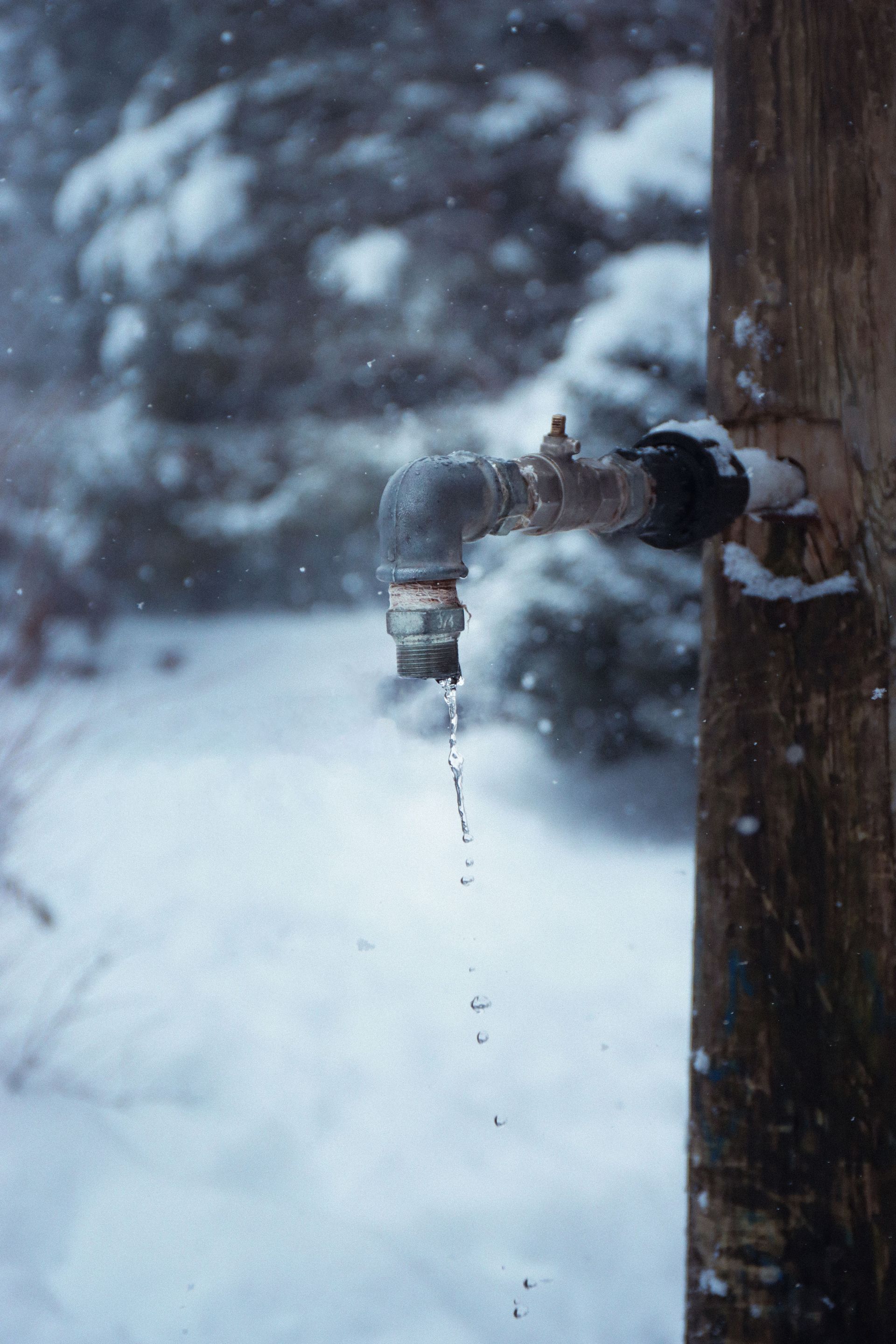
Foam covers for spigots are easy to find at a hardware store, and disconnecting garden hoses before a freeze helps too. During a hard freeze, letting faucets drip slowly keeps water moving and relieves pressure, and opening the cabinet doors under sinks lets warm air reach the pipes. Learn where your main water shutoff is, and make sure everyone in the house can find it.
Freezing pipe damage is generally covered in an occupied home, as a sudden and accidental event. If the house will sit empty, though, say for a holiday trip, policies expect you to keep the heat on or shut off the water. That expectation connects to vacancy, a term for how long a home goes unoccupied, so ask before you leave town for a stretch. A quick call can save you a hard conversation later.
Outbuildings, well houses and the barn hydrant
Out here in Wise County, plenty of properties have a well house, a barn or a workshop. A well house is the small structure that shelters the pump, and a heat lamp inside it is a fire risk if it touches insulation or gets knocked loose. Use only equipment made for the purpose, secure it firmly, and check on it during the coldest nights.
Barn hydrants and the water lines running to them deserve the same attention, so insulate the pipe and drain what you can before a hard freeze. Detached structures like these fall under Coverage B, the part of a homeowners policy for other structures on your property. It is worth asking whether those limits match what is actually standing out there.
What your policy expects from you
Insurers think in terms of sudden and accidental versus gradual. A pipe that bursts in a freeze is sudden, while slow seepage behind a wall or a heating system nobody has serviced in years looks more like neglect, and a claim from that lands very differently. A policy expects you to maintain the home reasonably well, and this checklist is exactly the kind of upkeep that shows a loss was an accident rather than a slow failure.
If you would like to walk through this list for your own place,
our Rhome office is glad to talk it through with you, with no pressure and no obligation. We can look at your fireplace, your outbuildings and your water shutoff questions, and at how your policy treats each one.
TAP Insurance Agency is an independent agency that shops multiple carriers, so you get a comparison instead of a single answer. Here is hoping the first cold front of the year turns out to be a gentle one.
Call
(800) 666-2254 — or text
QUOTE to
(817) 646-6700 · tapinsuretx.com
Educational only; coverages and availability vary by carrier. TAP Insurance Agency, PLLC — Rhome, TX, licensed in Texas and Oklahoma.